

























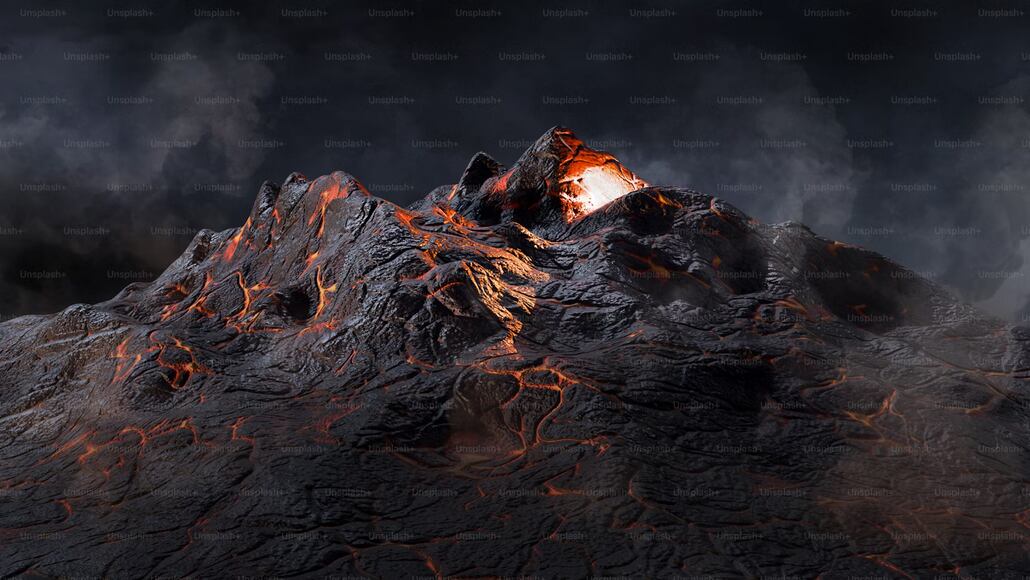


A groundbreaking study led by Joel Maquiling, a Filipino scientist heading the physics department at Ateneo de Manila University, has revealed the potential use of volcanic ash as a construction material with enhanced properties. Maquiling, alongside two other researchers, has been studying the ash emitted by the Taal volcano during its massive eruption five years ago, transforming this waste material into a sustainable resource.
Instead of treating the ash as mere waste, the researchers have discovered its potential applications in construction. By mixing volcanic ash with cement, they have successfully created construction blocks that can act as shields against harmful radiation.
“We’re not here just to build materials. It’s not just ‘build, build, build,’” Maquiling said, referring to a previously popular infrastructure initiative in the Philippines. “We want it to be ‘build, build, build’ but anchored on good science and engineering.”
Promising Results and Practical Applications
The researchers found that combining volcanic ash with other aggregates created concrete that is stronger and offers superior radiation shielding capabilities. Maquiling said this material could be used in critical areas, such as hospitals, industrial sites, and nuclear facilities.
“For example, what if they could shield you from a natural or cataclysmic radiation meltdown, or something like a nuclear event? The next question is, what if there are other properties from that strong infrastructure material that would protect us from nuclear warfare, for example, a nuclear meltdown, or radiation exposure? And that’s what we found in this,” Maquiling explained.
Beyond radiation shielding, the volcanic ash-based concrete offers a sustainable alternative to more expensive and environmentally harmful materials like concrete and lead. The innovation could also play a significant role in disaster-prone regions like the Philippines, allowing for the construction of safer buildings and homes.
Leveraging Geopolymers and Waste
Maquiling and his team are developing geopolymers, unique materials derived from natural disaster by-products. Following the January 2020 eruption of Taal volcano, which expelled tons of pyroclastic material, Maquiling was inspired to find innovative ways to use this waste.
“One thing that we wanted to do was to create materials which have greater compressive strength, that could withstand greater pressure, greater forces,” Maquiling told BenarNews.
An earlier news release from Ateneo University emphasized the material’s potential:
“Radiation shielding is essential for hospitals, industrial sites, and nuclear facilities. These places use ionizing radiation for beneficial purposes such as in helping doctors treat sick organs and broken bones; looking for structural weaknesses in buildings; or helping sterilize food for longer shelf life.”
“Though useful, exposure to ionizing radiation can be harmful for prolonged periods – hence the need for shielding. However, currently available materials like concrete and lead can be expensive and environmentally hazardous. Construction materials made from volcanic ash offer a [potentially] sustainable and lightweight alternative.”
A Vision for Sustainability
Maquiling’s laboratory is now collecting ash from other volcanoes in the Philippines, a country located on the Pacific Rim of Fire, where volcanic eruptions and earthquakes are common due to shifting tectonic plates. The Philippines has 24 active volcanoes, including Taal, which is regarded as one of the most dangerous volcanoes in the world.
The scientist envisions using waste materials, whether from volcanic eruptions or human activities, to create sturdier, radiation-resistant materials for infrastructure.
“What is important is that there are many waste materials we can use in our composites, to make sturdier materials that can withstand whatever strength in space and time, and it saves us a lot of resources,” Maquiling said. “Why don’t we use these waste materials that were created anyway as by-products of our human activities to be able to come up with sturdier materials that can be useful in infrastructure, that can protect us from radiation and at the same time enhance our well-being.”
While the research is still in its early stages, the results so far are promising. The innovation not only provides a practical way to manage volcanic ash but also highlights the potential for life-saving applications derived from natural disasters.