



























Close
MCE 2026
Saturday, March 7, 2026
JEC WORLD 2026

Takenaka Corporation to test autonomous vehicles and drones to revolutionize construction logistics at Osaka Expo 2025 Site

Note* - All images used are for editorial and illustrative purposes only and may not originate from the original news provider or associated company.

Subscribe

- Never miss a story with notifications

- Gain full access to our premium content

- Browse free from any location or device.

Media Packs

Expand Your Reach With Our Customized Solutions Empowering Your Campaigns To Maximize Your Reach & Drive Real Results!

– Access the Media Pack Now

– Book a Conference Call

Leave Message for Us to Get Back

Related stories

What’s the Best-Value Storage Container for Home Renovations? 6 Top Options in Dallas

Dallas renovation timelines can move fast. Crews that require...

WAC Group Launches WAC Architectural Commercial Lighting

WAC Group has introduced WAC Architectural, positioning it as...

Siemens Unveils Human-Centric Autonomous Buildings Strategy

Siemens is using Light + Building 2026 in Frankfurt,...
- Advertisement -

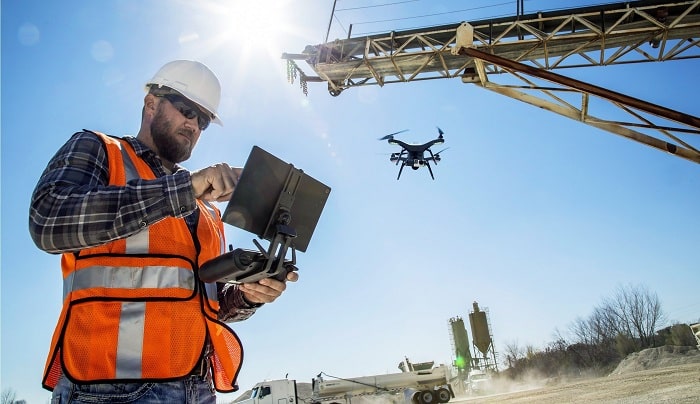
Japanese construction company Takenaka Corporation, in collaboration with other partners, will conduct a demonstration experiment combining autonomous vehicle transportation and drone flight in December.

This initiative will take place in Yumeshima in Osaka City, the construction site for the EXPO 2025 Osaka, Kansai. The project aims to enhance productivity and reduce manpower on construction sites by autonomously transporting materials within the site using vehicles and delivering them directly to workers by drones.

This experiment is part of the Ministry of Land, Infrastructure, Transport and Tourism’s 3D urban model initiative, “Project PLATEAU.” The autonomous vehicle transportation system is being developed in partnership with Tokyo-based start-up ADAWARP Japan, while the autonomous drone flight system is being developed with SENSYN Robotics.

Among the prior experiments, the autonomous vehicle transportation system was tested on public roads in Osaka City. Vehicles equipped with LiDAR technology, which measures distances to buildings, navigated through a 3D virtual model of the city, efficiently creating a point cloud map. This map allowed for accurate self-positioning in the real world, confirming the feasibility of autonomous driving. This marks Japan’s first autonomous driving system utilizing a 3D urban model.

For the autonomous drone flight experiment, GPS, LiDAR, and Visual Inertial Odometry (VIO) technology, which calculates movement by capturing continuous changes in camera images, were integrated. In areas where GPS accuracy declines, VIO ensured precise positioning through image analysis. The results confirmed that drones could safely and accurately navigate both indoors and outdoors, even among high-rise buildings.


Achema Middleeast

Latest stories

Related stories

What’s the Best-Value Storage Container for Home Renovations? 6 Top Options in Dallas

Dallas renovation timelines can move fast. Crews that require...

WAC Group Launches WAC Architectural Commercial Lighting

WAC Group has introduced WAC Architectural, positioning it as...

Siemens Unveils Human-Centric Autonomous Buildings Strategy

Siemens is using Light + Building 2026 in Frankfurt,...

7 Waste Reduction Strategies for Construction Sites

The construction industry is notorious for producing excessive waste,...

Subscribe

- Never miss a story with notifications

- Gain full access to our premium content

- Browse free from any location or device.

Media Packs

Expand Your Reach With Our Customized Solutions Empowering Your Campaigns To Maximize Your Reach & Drive Real Results!

– Access the Media Pack Now

– Book a Conference Call

Leave Message for Us to Get Back

Translate »