






















Key Takeaways:
- The long-term durability of any structure depends on a continuous, high-performance weatherproofing system that manages the complex interfaces between different building materials to prevent moisture ingress and structural rot.
- Modern weather sealing technologies provide the dual benefit of protecting building longevity while significantly enhancing energy efficiency by creating an airtight envelope that prevents hidden condensation.
- Rigorous on-site testing and the adoption of advanced, liquid-applied membranes and self-healing materials represent the future of construction quality, ensuring a lower total cost of ownership for building owners.
The longevity of a building is often determined not by its strongest beams or most expensive finishes, but by the integrity of its smallest joints and seals. In the relentless battle against the elements, moisture is the most persistent and destructive adversary. Without effective protection, water can infiltrate the building envelope, leading to rot, mold, corrosion of structural steel, and the eventual degradation of the entire structure. The sophisticated weather sealing technologies building longevity depends on have evolved from simple caulking to complex, integrated systems designed to manage air, vapor, and liquid water with surgical precision. By ensuring a watertight and airtight enclosure, these technologies protect the developer’s investment and the health of the occupants for decades.
The Science of the Building Envelope
A building’s “skin” is a complex assembly of different materials glass, metal, stone, and brick each with its own rate of thermal expansion and contraction. The primary challenge for weather sealing technologies building longevity is to maintain a continuous seal at the interfaces between these diverse materials. This requires sealants and membranes that are not only waterproof but also highly flexible and UV-resistant. Modern silicone-based and polyurethane sealants are engineered to withstand extreme temperature fluctuations without cracking or losing adhesion, ensuring that the “handshake” between a window frame and the surrounding masonry remains secure through every season.
The Role of Liquid-Applied Membranes
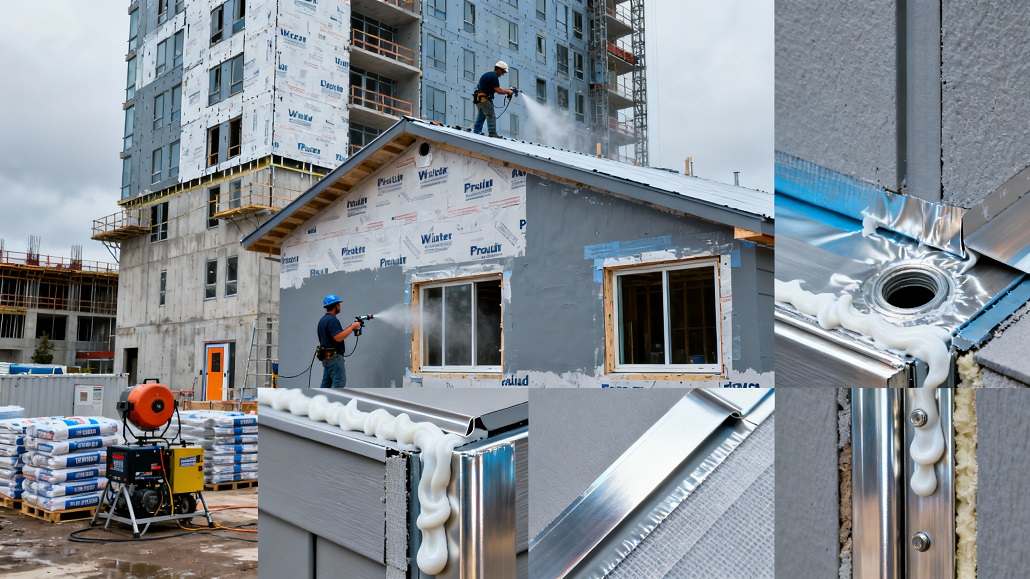
In the past, building paper or felt was the standard for weatherproofing, but these materials were prone to tearing and often left gaps at critical corners. Today, the weather sealing technologies building longevity relies on often include liquid-applied air and water barriers. These coatings are sprayed or rolled onto the structural substrate, creating a seamless, monolithic layer that follows the building’s contours exactly. Because they are seamless, they eliminate the risk of water creeping behind a lap joint. Furthermore, many of these membranes are “vapor-permeable,” meaning they allow trapped moisture inside the wall to escape as a gas while preventing liquid water from entering, effectively allowing the building to “breathe.”
Advancements in Flashing and Transition Strips
The corners, windows, and roof-to-wall transitions are the areas most vulnerable to failure. Modern weather sealing technologies building longevity strategies employ specialized “high-performance flashing” made from flexible, self-adhering membranes or robust metals like stainless steel and copper. These components are designed to “shed” water away from the structure and out through designated weep holes. Transition strips specialized gaskets that connect different types of weatherproofing systems ensure that there is never a break in the building’s defensive line. This continuity is the secret to a long-lasting, durable exterior.
Air Infiltration and Energy Performance
While water is the most visible threat, air leakage is a “silent” destroyer of building longevity. When warm, moist indoor air leaks into a cold wall cavity during winter, it reaches its “dew point” and condenses into liquid water. This hidden condensation is a leading cause of structural rot and mold. Therefore, the weather sealing technologies building longevity focuses on are also designed to create an airtight seal. By preventing air infiltration, these systems also significantly improve the building’s energy efficiency, reducing the load on HVAC systems and lowering operational costs. This dual benefit of durability and sustainability is what makes high-quality weatherproofing a non-negotiable part of modern construction.
Thermal Bridging and Sealing Solutions
A common failure point in building performance is “thermal bridging,” where a highly conductive material (like a steel stud) creates a path for heat to bypass the insulation. Advanced weather sealing technologies building longevity techniques include the use of “thermal breaks” non-conductive gaskets or spacers integrated into window frames and cladding supports. By sealing these thermal pathways, engineers prevent the cold spots that often lead to surface condensation and subsequent material degradation. This level of detail in sealing solutions is what separates a high-quality building from one that will require expensive facade remediation in just a few years.
Durability Testing and Quality Assurance
Given the stakes, the industry has developed rigorous testing protocols to verify the effectiveness of these systems. “Blower door tests” are used to measure the overall airtightness of a completed building, while “water spray tests” involve subjecting a specific window or wall assembly to high-pressure water jets to check for leaks. The weather sealing technologies building longevity provides are only as good as their installation, which is why on-site quality assurance is critical. Many manufacturers now require that their products be installed by certified contractors and undergo third-party inspection to ensure that the design intent is fully realized in the field.
The Financial Impact of Building Durability
For a building owner, the cost of high-quality weatherproofing systems is a fraction of the total project budget, yet its impact on the building’s value is immense. A structure with a reputation for leaks or moisture problems becomes a liability that is difficult to lease or sell. Conversely, a building that utilizes the latest weather sealing technologies building longevity can offer will have lower maintenance costs, higher energy efficiency, and a much longer service life. This translates into a higher return on investment and a lower “total cost of ownership,” making the initial investment in superior sealing technologies a very wise financial decision.
Future Trends in Weatherproofing Technology
The future of weatherproofing lies in “smart” and “self-healing” materials. Researchers are developing sealants that can detect a crack and release a chemical agent to seal it automatically. Additionally, we are seeing the rise of “biomimetic” coatings that mimic the water-repellent properties of the lotus leaf, causing water to bead and roll off, taking dirt and pollutants with it. These advanced weather sealing technologies building longevity will eventually become the new standard, allowing us to build structures that are not only more resilient but also require far less human intervention to maintain their integrity over time.
Sustainability and Low-VOC Solutions
As the construction industry moves toward “greener” practices, there is a growing demand for weatherproofing products that are free from harmful volatile organic compounds (VOCs). The newest weather sealing technologies building longevity features use water-based or bio-based chemistries that are safer for both the installers and the environment. These products provide the same high-level performance as their traditional solvent-based counterparts while contributing to a healthier indoor air quality for the occupants. This alignment of health, safety, and durability is the hallmark of modern construction quality.
The Crux of Exterior Protection
In conclusion, the integrity of the building envelope is the foundation of a structure’s long-term success. The sophisticated weather sealing technologies building longevity requires are the result of decades of engineering and material science innovation. By creating a robust, continuous barrier against water and air, these systems ensure that our built environment can withstand the challenges of a changing climate. The core of this protection the weather sealing technologies building longevity remains the most essential investment for anyone looking to build a structure that truly stands the test of time.
