

























Close
ALUMINIUM CHINA2026
Thursday, May 7, 2026
R+T Asia 2026

Offsite Construction is the way forward in New Zealand

Note* - All images used are for editorial and illustrative purposes only and may not originate from the original news provider or associated company.

Subscribe

- Never miss a story with notifications

- Gain full access to our premium content

- Browse free from any location or device.

Media Packs

Expand Your Reach With Our Customized Solutions Empowering Your Campaigns To Maximize Your Reach & Drive Real Results!

โ€“ Access the Media Pack Now

โ€“ Book a Conference Call

โ€“ Leave Message for Us to Get Back

Related stories

Self Healing Materials Improving Construction Durability

Advanced infrastructure resilience relies on the integration of self-healing technologies capable of autonomously repairing structural fissures. These innovative materials extend the operational lifespan of concrete and asphalt, significantly reducing lifecycle maintenance expenditures while ensuring public safety through proactive damage mitigation.

BIM to Digital Thread Transforming Construction Data

The evolution from Building Information Modeling (BIM) to a comprehensive digital thread represents a fundamental shift in how construction data is managed. By establishing a continuous and interconnected data stream from initial design through facility management, stakeholders can ensure information integrity, enhance collaboration, and optimize the entire lifecycle of the built environment.

AR VR Construction Enhancing Design Collaboration

Immersive technologies like Augmented Reality (AR) and Virtual Reality (VR) are redefining design collaboration in the construction industry. By enabling stakeholders to experience projects in a high-fidelity virtual environment, these tools facilitate real-time coordination, minimize design discrepancies, and foster a deeper understanding of complex spatial relationships before ground is even broken.
- Advertisement -

New Zealand is intending to scale up the housing infrastructure through offsite manufacturing.

New Zealandโ€™s government is putting a lot of thrust on the use of offsite manufacturing to make sure that there is an adequate supply of housing construction. According to Megan Woods, Housing Minister, the government is taking up steps to ensure that the construction industry is gearing itself up in order to deliver greater quantity of affordable homes. According to her, it is the most since 1970โ€™s that the homes have been built under this Governmentโ€™s tenure. A record $ 13bn residential construction was done last year but more needs to be done so as to overcome the current home shortage situation.

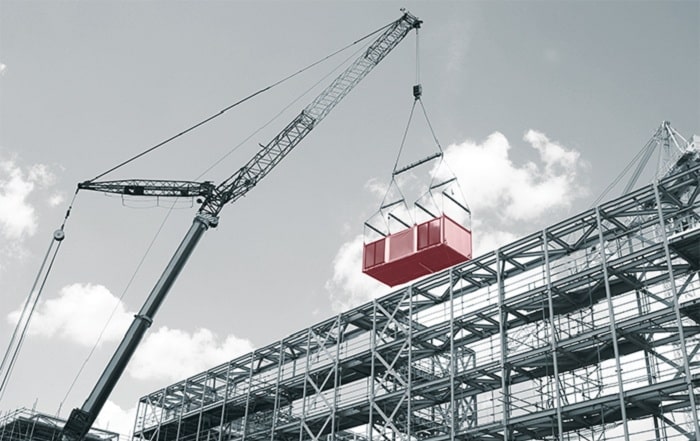
They indeed need to find new avenues to get the houses built rather quickly and offsite manufacturing can be the answer to their immediate issues. This type of manufacturing has the potential to transform the sector as it often offers innovative ways to build homes at a lower cost. Housing New Zealand confirms that building new homes through Offsite Manufacturing can reduce the time taken by as much as half as compared to the conventional building techniques. One of the most compelling reasons why offsite manufacturing

The Government has been working with OSMโ€™s- Offsite Manufacturing players to assist into KiwiBuild, a real estate development scheme which has begun with the aim of building 100,000 homes by 2028. The scale of this program is huge and the use of offsite manufacturing will improve the productivity of New Zealandโ€™s building and construction capacity.

Achema Middleeast

Latest stories

Related stories

Self Healing Materials Improving Construction Durability

Advanced infrastructure resilience relies on the integration of self-healing technologies capable of autonomously repairing structural fissures. These innovative materials extend the operational lifespan of concrete and asphalt, significantly reducing lifecycle maintenance expenditures while ensuring public safety through proactive damage mitigation.

BIM to Digital Thread Transforming Construction Data

The evolution from Building Information Modeling (BIM) to a comprehensive digital thread represents a fundamental shift in how construction data is managed. By establishing a continuous and interconnected data stream from initial design through facility management, stakeholders can ensure information integrity, enhance collaboration, and optimize the entire lifecycle of the built environment.

AR VR Construction Enhancing Design Collaboration

Immersive technologies like Augmented Reality (AR) and Virtual Reality (VR) are redefining design collaboration in the construction industry. By enabling stakeholders to experience projects in a high-fidelity virtual environment, these tools facilitate real-time coordination, minimize design discrepancies, and foster a deeper understanding of complex spatial relationships before ground is even broken.

AI Workforce Analytics Improving Construction Safety

Integrating AI workforce analytics into construction environments is fundamentally transforming safety protocols and risk management. By leveraging computer vision, wearable technology, and predictive modeling, firms can monitor worker behavior in real-time, anticipate potential hazards, and implement proactive measures to ensure a secure and productive job site.

Subscribe

- Never miss a story with notifications

- Gain full access to our premium content

- Browse free from any location or device.

Media Packs

Expand Your Reach With Our Customized Solutions Empowering Your Campaigns To Maximize Your Reach & Drive Real Results!

โ€“ Access the Media Pack Now

โ€“ Book a Conference Call

โ€“ Leave Message for Us to Get Back

Translate ยป