
























Key Takeaways
- Modern concrete repair and strengthening technologies can extend structure lifespans by decades
- Epoxy injection and FRP composites address both surface and structural issues effectively
- Professional assessment methods identify deterioration early, reducing long-term costs
- Polymer-enhanced repair materials ensure durable bonds and reduce future cracking
- Regular maintenance combined with advanced repairs supports sustainable asset preservation
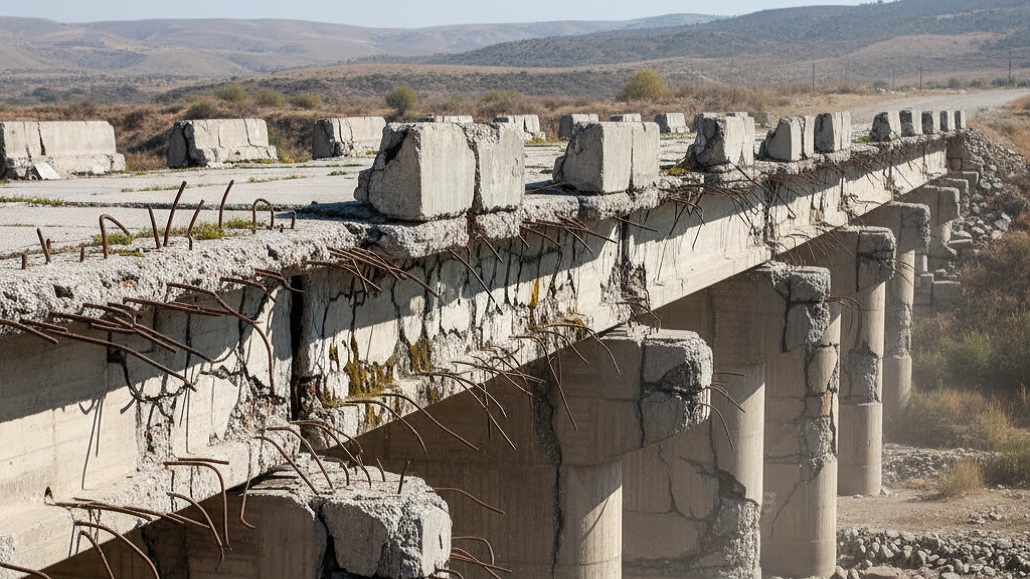
Concrete stands as one of the most enduring building materials in modern construction, yet even the most robustly designed structures require intervention to maintain their integrity over time. Environmental exposure, mechanical stress, and chemical processes gradually compromise concrete’s strength, leading to cracking, spalling, and corrosion of reinforcement. Rather than accepting progressive deterioration or investing in costly demolition, advanced repair and strengthening techniques now enable facility managers and property owners to restore deteriorating structures to functional condition while extending their service lives significantly.
The foundation of successful concrete repair and strengthening lies in understanding what causes deterioration in the first place. Freeze-thaw cycles in colder climates create internal stress as water infiltrates concrete and expands upon freezing. Carbonation a process where atmospheric carbon dioxide reacts with the concrete matrix gradually neutralizes the alkaline environment that protects embedded steel reinforcement. Chloride penetration, particularly common in coastal areas where salt spray or de-icing salts are prevalent, accelerates corrosion of steel within the concrete. Alkali-silica reactivity occurs when certain aggregates react with alkaline pore solutions, causing expansion and internal cracking. Each of these mechanisms presents distinct challenges, necessitating tailored assessment and repair strategies.
Understanding Concrete Deterioration and Assessment Approaches
Before selecting any concrete repair and strengthening method, a thorough assessment of the existing structure is essential. Visual inspection forms the foundation of this evaluation, with engineers examining surface condition, identifying cracks, noting spalling patterns, and assessing overall structural appearance. However, visual assessment alone cannot determine the extent of internal damage, depth of deterioration, or remaining structural capacity.
Advanced diagnostic techniques now complement visual inspection, providing detailed information about concrete condition beneath the surface. Ultrasonic testing measures the velocity of sound waves traveling through concrete, with anomalies indicating potential voids, delamination, or internal cracking. Cores extracted from the structure allow laboratory analysis of concrete strength, carbonation depth, and chloride content critical data for determining appropriate repair strategies. Half-cell potential testing identifies areas of active corrosion in reinforced concrete by measuring electrical potential differences. These assessment methods ensure that repair strategies address root causes rather than merely treating symptoms, significantly improving repair durability and long-term outcomes.
Epoxy Injection: Restoring Structural Integrity
Among concrete repair and strengthening techniques, epoxy injection stands as one of the most effective methods for addressing cracks in concrete structures. This process involves injecting low-viscosity epoxy resin into cracks that have developed within concrete elements, where the resin penetrates deeply into fine fractures, chemically bonding the separated concrete sections together.
The epoxy injection process begins with thorough cleaning and preparation of the crack. Contractors remove loose concrete, dust, and contaminants from within the crack to ensure optimal epoxy penetration and bonding. In some cases, the crack may be slightly widened to facilitate easier resin injection. Once properly prepared, injection ports are installed at intervals along the crack, and the epoxy is pumped under pressure. The pressure ensures that the epoxy fully penetrates even the finest fractures, not merely filling surface-level voids.
What distinguishes epoxy injection from simple concrete patching lies in the superior bond strength it creates. Epoxy resins form bonds often stronger than the concrete itself, effectively restoring the monolithic nature of cracked concrete and recovering tensile strength. This characteristic proves particularly valuable for critical structural elements where load-carrying capacity must be restored. The precision of epoxy injection allows targeted repairs to specific cracks while minimizing disruption to surrounding concrete surfaces, making it an ideal approach for structures where preservation of existing concrete is paramount.
Strengthening with Fiber-Reinforced Polymers
When structural capacity has been compromised beyond what repair alone can address, strengthening with fiber-reinforced polymers (FRP) provides a non-invasive method to increase load-bearing capability. FRP composites, consisting of carbon or glass fibers embedded in a polymer matrix, offer exceptional strength-to-weight ratios combined with resistance to corrosion and environmental degradation.
FRP wrapping involves applying composite layers to the exterior of concrete members, typically beams, columns, or entire structural elements. The fibers are oriented to provide maximum reinforcement in directions where additional strength is needed, commonly along the length of beams to increase flexural capacity. The polymer matrix bonds the fibers to the concrete substrate and transfers loads between the composite and the existing structure. Unlike steel plate bonding, which requires mechanical connections and can be labor-intensive, FRP wrapping creates seamless integration with the concrete surface and requires no drilling or bolting.
Beyond structural enhancement, FRP wrapping acts as an excellent barrier against corrosive agents, protecting the underlying concrete from aggressive environmental attack. This dual function simultaneously increasing load-bearing capacity while preventing further deterioration makes FRP strengthening particularly cost-effective for aging infrastructure. The lightweight nature of FRP composites also makes them suitable for applications where adding steel reinforcement would create unacceptable weight increases.
Cementitious Repair Materials and Grouting Solutions
For larger voids, delaminated concrete areas, and structural gaps requiring consolidation, cementitious grouting and polymer-modified cementitious repair materials offer reliable solutions. These materials combine the familiarity and cost-effectiveness of cement-based systems with additives that enhance bonding, reduce shrinkage, and improve durability.
Cementitious grouting involves pumping grout typically a blend of cement, fine aggregates, and water under pressure into cracks or voids within the concrete. The grout flows into spaces and solidifies, bonding with surrounding concrete and restoring structural continuity. This method proves particularly suitable for larger cracks, delaminated areas in bridge decks, and restoration of concrete foundations. The grout’s pumpability can be adjusted to accommodate different crack widths and flow requirements.
Polymer-modified cementitious repair materials incorporate admixtures that enhance adhesion to existing concrete substrates, reduce drying shrinkage, and improve tensile strength. These materials address one of the primary challenges in concrete repair: ensuring adequate bonding between new repair material and old concrete. The polymer modification increases flexibility, allowing the repair material to accommodate movement and vibration without debonding. Low-viscosity epoxy serves similar functions in consolidated concrete areas, filling capillaries, fissures, and voids while dramatically improving the density and durability of the repaired zone.
Shotcrete and Surface Repair Techniques
For large-scale deterioration affecting substantial concrete areas, shotcrete concrete applied pneumatically to concrete surfaces provides an efficient rehabilitation solution. This technique proves particularly valuable for tunnels, retaining walls, bridge piers, and other structures where large areas require restoration. Shotcrete application involves spraying a mixture of cement, aggregates, and water onto the concrete surface at high velocity, where impact consolidates the material and bonds it to the substrate.
Modern shotcrete systems incorporate fiber reinforcement and specialized additives that improve cohesion and reduce rebound (material that bounces off during application). The speed of shotcrete placement reduces labor costs compared to traditional formed concrete, while the application method adapts to irregular surfaces and complex geometries. When properly specified and applied by experienced contractors, shotcrete restores both structural and non-structural elements effectively.
Surface-level repairs address deterioration that has not penetrated deeply into the concrete matrix. These repairs, common for spalling and surface cracking, involve removing deteriorated concrete to a sound substrate and replacing it with repair mortar or concrete. Proper surface preparation roughening the substrate and ensuring good bonding conditions ensures that repair materials adhere effectively and provide durable service.
Ensuring Long-Term Repair Durability
The most critical factor determining whether a repair will prove successful is the adhesion between the repair material and existing concrete substrate. Research consistently demonstrates that repairs fail not because the repair material itself is inadequate, but because insufficient bonding allows separation between new and old concrete. This adhesion challenge became more pronounced with modern repair materials, which often exhibit different physical properties than the concrete they repair.
Successful repairs require careful attention to dimensional compatibility, particularly regarding drying shrinkage. Excessive shrinkage in repair materials creates internal stress that eventually causes cracking and debonding. The most durable repairs incorporate low-shrinkage materials, careful surface preparation, and in some cases, application of bonding agents that chemically link new and old concrete.
A fundamental principle applies to all concrete repair and strengthening work: repairs survive their first year with minimal complications if they are likely to prove durable for ten years or more. This concept underscores the importance of selecting appropriate materials and application techniques initially, as repeated repairs in the same area prove costly and ultimately ineffective.
Supporting Sustainable Asset Preservation
The philosophy of concrete repair and strengthening aligns fundamentally with sustainable construction practices. Rather than demolishing aging infrastructure and constructing replacements processes that consume enormous quantities of raw materials and energy rehabilitating existing structures preserves embodied energy and reduces waste significantly. Concrete that would otherwise be landfilled remains in service, supporting circular economy principles and extending the productive life of construction assets.
Advanced repair methods enable property owners to maintain structural functionality while deferring major replacement projects, reducing overall lifecycle costs. A strategically repaired bridge, building, or industrial facility continues serving its intended purpose for additional decades with proper maintenance. This extended service life translates to deferred capital expenditures and improved return on investment.
Implementing concrete repair and strengthening techniques requires coordination among design professionals, experienced contractors, and material suppliers. Successful projects begin with thorough assessment of existing conditions, clear definition of repair objectives, and careful material selection based on specific deterioration mechanisms and environmental conditions. The combination of proven methodologies, advanced materials, and professional expertise ensures that concrete structures continue providing reliable service for generations to come, supporting both economic objectives and environmental stewardship through sustainable asset preservation.
