
























Close
WORLD OF CONCRETE
Saturday, December 20, 2025
JEC WORLD 2026

USA Immigration Policies Lead To Home Construction Crisis

Note* - All images used are for editorial and illustrative purposes only and may not originate from the original news provider or associated company.

Subscribe

- Never miss a story with notifications

- Gain full access to our premium content

- Browse free from any location or device.

Media Packs

Expand Your Reach With Our Customized Solutions Empowering Your Campaigns To Maximize Your Reach & Drive Real Results!

– Access the Media Pack Now

– Book a Conference Call

Leave Message for Us to Get Back

Related stories

How To Choose Trailer GPS Units That Actually Work for UK Fleets

You know the drill. A trailer van goes missing...

Improving Construction Efficiency Without Compromising Quality

Achieving construction efficiency requires process-focused improvements that enhance productivity while maintaining or improving quality standards. Through workflow optimization, enhanced coordination mechanisms, quality management practices, and strategic technology integration, construction organizations deliver projects faster and more cost-effectively without sacrificing structural integrity or compliance. Balancing speed with excellence transforms construction management from a trade-off exercise into a synergistic approach where efficiency and quality reinforce one another.

Training Strategies for Operating Advanced Construction Equipment

Modern construction equipment demands operator skills that extend far beyond basic machinery operation. Comprehensive training programs combining classroom instruction, simulator practice, and hands-on field experience prepare operators to safely and efficiently manage increasingly sophisticated equipment. Through structured certification approaches, ongoing skill development, and commitment to continuous learning, construction organizations develop operator competency that enhances project safety, productivity, and equipment longevity.
- Advertisement -
Achema Middleeast

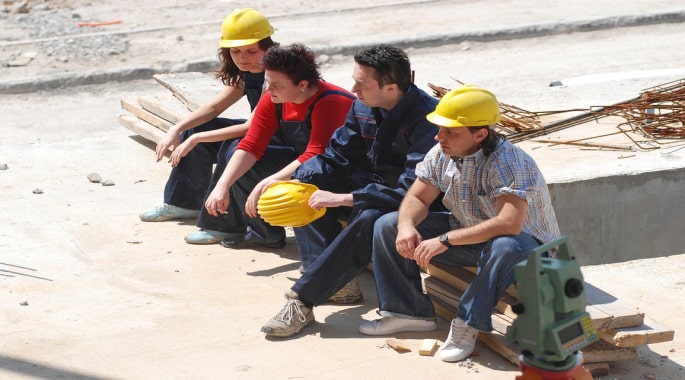
New home construction is crucial for lowering housing prices, but the rate of construction has been declining since March 2022. Experts attribute this decline to tough immigration policies that have reduced the construction workforce. According to data from the Census Bureau, foreign-born individuals make up 30% of construction workers nationally, making immigrants an integral part of the home-building industry. However, due to tightened immigration policies introduced during the Trump administration and worsened by the pandemic, the number of foreign workers entering the construction industry has almost halved.

In 2016, there were over 67,000 new workers, compared to 38,900 in 2020. This shortage of immigrant workers has led to a construction deficit despite improved supply chains and material costs. For each additional 1% increase in immigrant workers, there was an estimated increase of 6,563 in the housing unit gap between supply and demand.

Tighter immigration policies have had a significant impact on industries reliant on immigrant labor, notably construction, leading to reduced construction activity in certain regions. The Trump administration’s objective of reducing immigration resulted in measures like visa freeze and executive orders focused on undocumented immigrants and border security. Consequently, in 2017, the number of new immigrant workers entering the construction industry declined by one-third, marking the first such decrease in six years. Estimates by researchers Giovanni Peri and Reem Zaiour from the University of California, Davis, indicate that there were over 2 million fewer immigrants entering the labor force than expected between March 2020 and late 2021

Since 2017, builders have faced labor shortages, leading to project delays, according to Joshua Correa, a Dallas home builder. The availability of workers has significantly decreased, resulting in longer wait times to secure labor. When foreign-born workers are not accessible, experts assert that there is a lack of US-born workers to fill the gap. Research by Michael Clemens, an economics professor at George Mason University, shows that immigrant and US-born workers are not easily substitutable. The presence of immigrant labor does not result in reduced hiring of U.S.-born workers, and firms without access to low-skill immigrant labor experience a notable 17% decline in profits. Additionally, turnover rates are high among U.S.-born workers hired to replace the shortage.

To address the ongoing labor shortage, builders such as Joshua Correa have been compelled to raise prices in order to entice workers and stay competitive in the industry. This increase in prices is necessary to attract workers who are in high demand due to the scarcity of available labor. Without significant changes to alleviate the labor shortage, the situation is projected to deteriorate further.

Achema Middleeast

Latest stories

Related stories

How To Choose Trailer GPS Units That Actually Work for UK Fleets

You know the drill. A trailer van goes missing...

Improving Construction Efficiency Without Compromising Quality

Achieving construction efficiency requires process-focused improvements that enhance productivity while maintaining or improving quality standards. Through workflow optimization, enhanced coordination mechanisms, quality management practices, and strategic technology integration, construction organizations deliver projects faster and more cost-effectively without sacrificing structural integrity or compliance. Balancing speed with excellence transforms construction management from a trade-off exercise into a synergistic approach where efficiency and quality reinforce one another.

Training Strategies for Operating Advanced Construction Equipment

Modern construction equipment demands operator skills that extend far beyond basic machinery operation. Comprehensive training programs combining classroom instruction, simulator practice, and hands-on field experience prepare operators to safely and efficiently manage increasingly sophisticated equipment. Through structured certification approaches, ongoing skill development, and commitment to continuous learning, construction organizations develop operator competency that enhances project safety, productivity, and equipment longevity.

Managing Material Costs in a Volatile Construction Market

Construction material price volatility presents significant challenges to project budgeting and risk management. Strategic procurement approaches, supply chain resilience strategies, and contract mechanisms that balance risk effectively enable stakeholders to navigate market fluctuations successfully. Understanding market dynamics, implementing escalation clauses, developing flexible procurement strategies, and maintaining strong supplier relationships help construction professionals maintain project viability despite unpredictable material cost movements.

Subscribe

- Never miss a story with notifications

- Gain full access to our premium content

- Browse free from any location or device.

Media Packs

Expand Your Reach With Our Customized Solutions Empowering Your Campaigns To Maximize Your Reach & Drive Real Results!

– Access the Media Pack Now

– Book a Conference Call

Leave Message for Us to Get Back

Translate »