

























Close
WORLD OF CONCRETE
Friday, December 19, 2025
JEC WORLD 2026

UN Report Urges Global Action On Construction Emissions

Note* - All images used are for editorial and illustrative purposes only and may not originate from the original news provider or associated company.

Subscribe

- Never miss a story with notifications

- Gain full access to our premium content

- Browse free from any location or device.

Media Packs

Expand Your Reach With Our Customized Solutions Empowering Your Campaigns To Maximize Your Reach & Drive Real Results!

– Access the Media Pack Now

– Book a Conference Call

Leave Message for Us to Get Back

Related stories

How To Choose Trailer GPS Units That Actually Work for UK Fleets

You know the drill. A trailer van goes missing...

Lifecycle Focused Construction Practices for Sustainable Infrastructure

Sustainable infrastructure development requires extending construction thinking beyond initial project completion to encompass the entire building lifecycle spanning decades of operation, maintenance, and eventual decommissioning. By integrating lifecycle cost analysis, selecting durable materials, designing for operational efficiency, planning for maintenance accessibility, and anticipating end-of-life material recovery, construction professionals create assets that deliver long-term value while minimizing environmental impact. This holistic approach transforms infrastructure from cost centers requiring perpetual maintenance into resilient assets that serve communities sustainably across generations.

Improving Construction Efficiency Without Compromising Quality

Achieving construction efficiency requires process-focused improvements that enhance productivity while maintaining or improving quality standards. Through workflow optimization, enhanced coordination mechanisms, quality management practices, and strategic technology integration, construction organizations deliver projects faster and more cost-effectively without sacrificing structural integrity or compliance. Balancing speed with excellence transforms construction management from a trade-off exercise into a synergistic approach where efficiency and quality reinforce one another.
- Advertisement -
Achema Middleeast

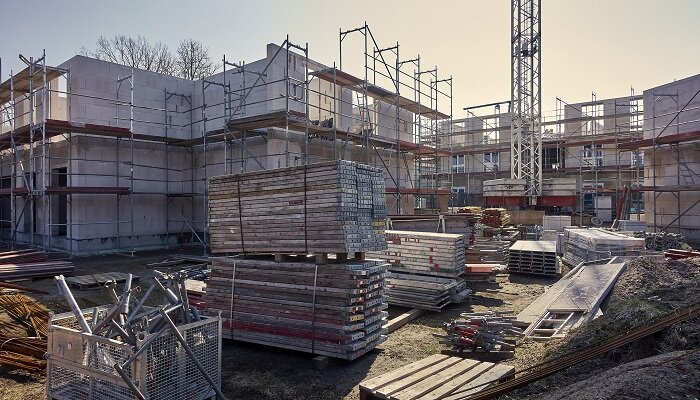
The global phenomenon of rapid urbanization results in the addition of buildings equivalent to the size of Paris every five days, with the built environment sector already being responsible for 37 percent of worldwide emissions. A newly released report by the UN Environment Programme (UNEP) and the Yale Center for Ecosystems + Architecture (Yale CEA), under the Global Alliance for Buildings and Construction (GlobalABC), presents solutions for reducing carbon emissions and waste in the buildings and construction sector.

The report, titled “Building materials and the climate: Constructing a new future,” provides a three-pronged approach for policymakers, manufacturers, architects, developers, engineers, builders, and recyclers to cut down on “embodied carbon” emissions and minimize the negative impacts on natural ecosystems caused by building material production and deployment (such as cement, steel, aluminum, timber, and biomass):

  • Promote a circular approach to avoid waste: Repurposing existing buildings is the most environmentally friendly option, producing 50-75 percent fewer emissions compared to new construction. This approach encourages construction with fewer materials, those with a lower carbon footprint, and materials that are easy to reuse or recycle.
  • Shift to ethically and sustainably sourced renewable bio-based building materials: This includes materials like timber, bamboo, and biomass. Transitioning to properly managed bio-based materials could lead to significant emissions reductions, up to 40 percent in some regions by 2050. However, this shift requires more policy and financial support.
  • Improve decarbonization of conventional materials that cannot be replaced: This mainly concerns concrete, steel, aluminum, glass, and bricks, which account for 23 percent of global emissions. Priorities should include using renewable energy in production, increasing the use of reused and recycled materials, and adopting innovative technologies. Transforming regional markets and building cultures is vital through building codes, certification, labeling, and educating architects, engineers, and builders about circular practices.

The implementation of the Avoid-Shift-Improve solution should span the entire building process to reduce emissions and protect human health and ecosystems. Sensitivity to local cultures and climates is essential, considering the widespread perception of concrete and steel as modern materials of choice.

Sheila Aggarwal-Khan, Director of UNEP’s Industry and Economy Division, emphasized that despite the use of modern materials like concrete and steel, which often end up in landfills, achieving net zero in the building sector by 2050 is feasible with the right policies and regulations.

While most climate action in the building sector has focused on reducing operational carbon emissions, the report underscores the importance of addressing embodied carbon emissions from the entire life cycle of building materials. This requires coordinated efforts across sectors and stages, from extraction to demolition.

Government regulation and enforcement are critical throughout the building life cycle, ensuring transparency in labeling, international building codes, and certification schemes. Research and development of new technologies and stakeholder training are also necessary. Incentives for cooperative ownership models between producers, builders, owners, and occupants can facilitate the shift to circular economies.

Dr. Vera Rodenhoff, Deputy Director General for International Climate Action and International Energy Transition of the German Federal Ministry for Economic Affairs and Climate Action, emphasized that decarbonizing the buildings and construction sector is crucial to limit global warming to 1.5°C.

Case studies from various countries illustrate how “Avoid-Shift-Improve” strategies can drive decarbonization, with developed economies renovating existing buildings and emerging economies adopting low-carbon building materials. Cities worldwide are playing a pivotal role in this transformation by incorporating vegetated surfaces to reduce carbon emissions, enhance urban biodiversity, and improve the overall environment.

Achema Middleeast

Latest stories

Related stories

How To Choose Trailer GPS Units That Actually Work for UK Fleets

You know the drill. A trailer van goes missing...

Lifecycle Focused Construction Practices for Sustainable Infrastructure

Sustainable infrastructure development requires extending construction thinking beyond initial project completion to encompass the entire building lifecycle spanning decades of operation, maintenance, and eventual decommissioning. By integrating lifecycle cost analysis, selecting durable materials, designing for operational efficiency, planning for maintenance accessibility, and anticipating end-of-life material recovery, construction professionals create assets that deliver long-term value while minimizing environmental impact. This holistic approach transforms infrastructure from cost centers requiring perpetual maintenance into resilient assets that serve communities sustainably across generations.

Improving Construction Efficiency Without Compromising Quality

Achieving construction efficiency requires process-focused improvements that enhance productivity while maintaining or improving quality standards. Through workflow optimization, enhanced coordination mechanisms, quality management practices, and strategic technology integration, construction organizations deliver projects faster and more cost-effectively without sacrificing structural integrity or compliance. Balancing speed with excellence transforms construction management from a trade-off exercise into a synergistic approach where efficiency and quality reinforce one another.

Training Strategies for Operating Advanced Construction Equipment

Modern construction equipment demands operator skills that extend far beyond basic machinery operation. Comprehensive training programs combining classroom instruction, simulator practice, and hands-on field experience prepare operators to safely and efficiently manage increasingly sophisticated equipment. Through structured certification approaches, ongoing skill development, and commitment to continuous learning, construction organizations develop operator competency that enhances project safety, productivity, and equipment longevity.

Subscribe

- Never miss a story with notifications

- Gain full access to our premium content

- Browse free from any location or device.

Media Packs

Expand Your Reach With Our Customized Solutions Empowering Your Campaigns To Maximize Your Reach & Drive Real Results!

– Access the Media Pack Now

– Book a Conference Call

Leave Message for Us to Get Back

Translate »