























Close
MCE 2026
Tuesday, January 20, 2026
JEC WORLD 2026

Russell Roof Tiles extends sustainable credentials with solar PV

Note* - All images used are for editorial and illustrative purposes only and may not originate from the original news provider or associated company.

Subscribe

- Never miss a story with notifications

- Gain full access to our premium content

- Browse free from any location or device.

Media Packs

Expand Your Reach With Our Customized Solutions Empowering Your Campaigns To Maximize Your Reach & Drive Real Results!

– Access the Media Pack Now

– Book a Conference Call

Leave Message for Us to Get Back

Related stories

Sustainable Construction Machinery for Low Emission Sites

Reducing the carbon footprint of the building sector requires a total reimagining of engine technology and energy consumption, leading to the rise of specialized machinery that balances power with environmental stewardship. By prioritizing low emission operation and energy-efficient designs, contractors are meeting the dual challenge of fulfilling ambitious infrastructure goals while adhering to increasingly stringent global climate regulations.

Digital Construction Sites Powered by Connected Equipment

The concept of a connected jobsite revolves around a unified digital ecosystem where every asset contributes real-time data to a centralized management hub, ensuring seamless coordination across large-scale projects. By integrating sophisticated data analytics and satellite-driven monitoring, the industry is moving toward a more transparent and highly optimized way of delivering complex infrastructure.

Automation Redefining Heavy Construction Equipment Operations

Removing the physical limitations of manual operation through sophisticated control logic allows heavy machinery to achieve tolerances and safety standards that were previously impossible, defining the new era of autonomous building. By transitioning toward self-correcting systems and remote-controlled assets, the sector is ensuring that complex infrastructure can be delivered with surgical precision and minimal human risk.
- Advertisement -
Advancing Prefabrication 2026

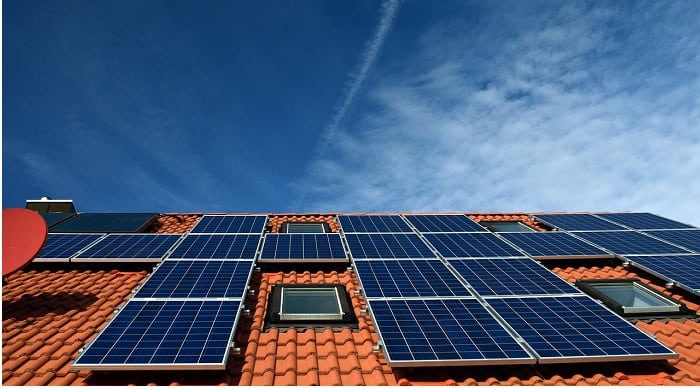
RUSSELL Roof Tiles has launched its first solar PV offer to the market as part of its commitment to sustainability. The independent manufacturer of concrete roof tiles and accessories said the launch comes with the same quality credentials and easy installation as its concrete products.

Following 18 months of research and development, the new in-roof solar PV system RussFast Solar has been designed to be compatible with most profiles of Russell Roof Tiles, offering a quality roof aesthetic for both commercial and domestic specification.

This is the latest in a line of strategic investments the company has made into its sustainability commitment over the past 10 years. Russell Roof Tiles announced its net zero 2040 target over two years ago, and the firm said it has already made ‘significant’ steps towards its goals by procuring 100% renewable electricity at all three manufacturing sites. This comes in addition to electrifying the ‘majority’ of its mobile plant fleet.

Over the past two years the company has invested over £3.25 million at the 11-acre Lochmaben plant including a £750,000 major upgrade last year, which is one of the biggest upgrades since its operation began back in 1986. The firm explained that the works improve efficiencies and speed up manufacturing and include a new and better-insulated curing chamber with a modern and improved heating system.

Russell Roof Tiles added that the launch of RussFast Solar enables it to make the most of the growing renewables market and to help meet Part L of the Building Regulations. Not just for residential projects, commercial markets are looking to decarbonise, and solar PV offers a popular choice for zero-carbon electricity, the firm added. In addition, local authorities are also looking to solar PV on public buildings and social housing.

The system features every element needed for a comprehensive in-roof array which is designed specifically to work with all Russell Roof Tiles interlocking tile profiles. The RussFast Solar system can be laid in a variety of configurations, and sits within the roof covering, offering ‘excellent’ aesthetics and ‘flexibility’ to suit all project or tile type, the firm said.

Dan Hancox, corporate sustainability and development director at Russell Roof Tiles, commented, “Our market leading offer will provide a 15-year roof system guarantee when it is installed as part of a full RussSpec, and fitted in accordance with our guidance, in addition our solar PV panels will provide a market-first 30-year performance guarantee.

“We have really focused on developing a solar PV system which can be fitted by roofing contractors in a similar way to traditional concrete roof tiles, with an interlocking system designed for quick and easy installation which mimics traditional tile laying.”

Andrew Hayward, MD of Russell Roof Tiles, added, “We are extremely excited to bring RussFast Solar to market and it is an important part of our continued development in sustainability. It is a tangible demonstration of our intent to encourage the market into reducing emissions.”

Achema Middleeast

Latest stories

Related stories

Sustainable Construction Machinery for Low Emission Sites

Reducing the carbon footprint of the building sector requires a total reimagining of engine technology and energy consumption, leading to the rise of specialized machinery that balances power with environmental stewardship. By prioritizing low emission operation and energy-efficient designs, contractors are meeting the dual challenge of fulfilling ambitious infrastructure goals while adhering to increasingly stringent global climate regulations.

Digital Construction Sites Powered by Connected Equipment

The concept of a connected jobsite revolves around a unified digital ecosystem where every asset contributes real-time data to a centralized management hub, ensuring seamless coordination across large-scale projects. By integrating sophisticated data analytics and satellite-driven monitoring, the industry is moving toward a more transparent and highly optimized way of delivering complex infrastructure.

Automation Redefining Heavy Construction Equipment Operations

Removing the physical limitations of manual operation through sophisticated control logic allows heavy machinery to achieve tolerances and safety standards that were previously impossible, defining the new era of autonomous building. By transitioning toward self-correcting systems and remote-controlled assets, the sector is ensuring that complex infrastructure can be delivered with surgical precision and minimal human risk.

Electrification Trends Shaping Construction Equipment Fleets

Transitioning from internal combustion to battery-powered systems involves more than just swapping engines; it requires a comprehensive overhaul of fleet logistics, charging infrastructure, and energy management. As the industry moves toward a net-zero future, the adoption of specialized battery-powered machinery is proving to be a catalyst for cleaner, quieter, and more efficient urban construction.

Subscribe

- Never miss a story with notifications

- Gain full access to our premium content

- Browse free from any location or device.

Media Packs

Expand Your Reach With Our Customized Solutions Empowering Your Campaigns To Maximize Your Reach & Drive Real Results!

– Access the Media Pack Now

– Book a Conference Call

Leave Message for Us to Get Back

Translate »