

















Close
WORLD OF CONCRETE
Friday, December 19, 2025
JEC WORLD 2026

MVRDV wins contract to design mixed-use complex in Germany

Note* - All images used are for editorial and illustrative purposes only and may not originate from the original news provider or associated company.

Subscribe

- Never miss a story with notifications

- Gain full access to our premium content

- Browse free from any location or device.

Media Packs

Expand Your Reach With Our Customized Solutions Empowering Your Campaigns To Maximize Your Reach & Drive Real Results!

– Access the Media Pack Now

– Book a Conference Call

Leave Message for Us to Get Back

Related stories

Human Machine Collaboration on Modern Construction Sites

Modern construction sites increasingly feature integrated teams where workers and machines collaborate as complementary partners, each contributing unique strengths toward shared objectives. This exploration examines collaborative workflows where technology augments human skill and judgment, improving overall productivity while simultaneously reducing physical strain on workers and enabling safer, more controlled construction processes. Advanced robotics, artificial intelligence, and intuitive human-machine interfaces create opportunities for seamless integration between human expertise and mechanical precision, establishing new models for effective teamwork in dynamic construction environments.

Top Benefits of Playground Artificial Turf for Safe Outdoor Play

Kids love to run, jump, and explore. Playgrounds give...
- Advertisement -
Achema Middleeast

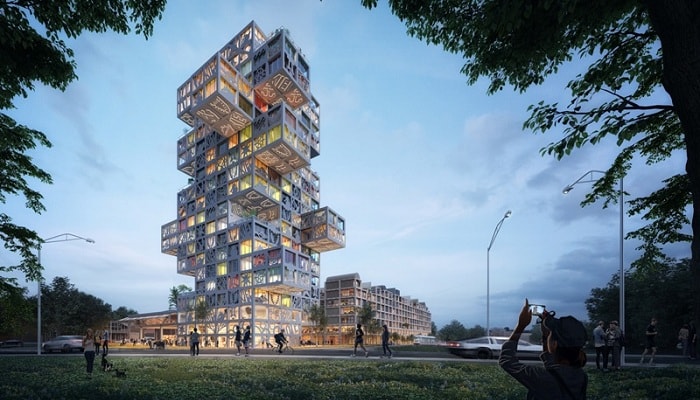
Netherlands-based architecture firm MVRDV has received a contract to design a mixed-use complex that will redevelop a post-industrial site in Kiel, Germany.

The 65,000m² mixed-use complex will be based on a flexible design system instead of a fixed and unchangeable plan. This will allow the project design to adapt to future needs of the community as its development progresses.

Under the proposal, labelled ‘KoolKiel’, the complex will house a hotel, offices, residences, commercial space, and an event space.

The site is currently occupied by a large, single-storey building, which was previously used to store chains for ships. Now known as W8 Medienzentrum, the building contains companies in the media and creative industries.

The building’s existing structure will be retained as commercial units, topped with apartments.

MVRDV’s proposal involves the development of a new building adjacent to W8 Medienzentrum.

The new building will have a zig-zagging plinth containing offices and shops, topped by several cubic blocks of housing, and a small tower housing office spaces.
At the end of the site, a 250-room hotel tower will connect to the plinth through a public event space used to conduct exhibitions and events.

MVRDV principal and co-founder Jacob van Rijs said: “In a location with such a dynamic and creative existing community, it’s obvious that the community should have a say in this development.

“KoolKiel is not only inspired by them, but it also allows them to tailor the proposal to their wishes. We’re presenting them with not just a design, but also a question: ‘how ‘Kool’ do you want it?’”

Exterior spaces to be developed include a furnished courtyard between the buildings and a rooftop park.

The project will have façade panels, made from fibre reinforced concrete, that feature icons inspired by the creative output of the local community.

The design system of the project offers flexibility in changing the size and number of cantilevers on the hotel tower, as well as the number of pictographic panels.

In addition, the flexible system will allow the size, number, and layout of apartments placed above the existing W8 building to be altered in accordance with future demands.

Achema Middleeast

Latest stories

Related stories

Human Machine Collaboration on Modern Construction Sites

Modern construction sites increasingly feature integrated teams where workers and machines collaborate as complementary partners, each contributing unique strengths toward shared objectives. This exploration examines collaborative workflows where technology augments human skill and judgment, improving overall productivity while simultaneously reducing physical strain on workers and enabling safer, more controlled construction processes. Advanced robotics, artificial intelligence, and intuitive human-machine interfaces create opportunities for seamless integration between human expertise and mechanical precision, establishing new models for effective teamwork in dynamic construction environments.

Top Benefits of Playground Artificial Turf for Safe Outdoor Play

Kids love to run, jump, and explore. Playgrounds give...

RMIT Researchers Turn Coffee Waste into Low-Carbon Concrete

RMIT University, Australia researchers are coming up with a...

Subscribe

- Never miss a story with notifications

- Gain full access to our premium content

- Browse free from any location or device.

Media Packs

Expand Your Reach With Our Customized Solutions Empowering Your Campaigns To Maximize Your Reach & Drive Real Results!

– Access the Media Pack Now

– Book a Conference Call

Leave Message for Us to Get Back

Translate »