

























You know the drill. A trailer van goes missing overnight. Drivers say they left it in the yard. Paperwork says it was booked out. Nobody really knows. Trailer GPS tracking stops that argument. It gives a location, a timeline and usually the first clue that something is wrong. But not all trailer trackers are equal. Pick the wrong unit and your data will be late, patchy or useless. Pick the right one and you cut theft, speed up recoveries and get a cleaner picture of utilisation.
What a trailer GPS unit must actually do
A trailer GPS tracking unit needs to do three basic jobs well. It must tell you where the trailer is. It must alert you if it moves without permission. It must survive long periods without maintenance. If any of those fail then the rest is window dressing. Real-world deployments use a mix of GNSS for location, motion sensors for tamper and movement, and a wide area radio for sending updates without killing the battery. The balance between how often a device reports and how long its battery lasts is the core trade off you will face.
Connectivity choices matter more than marketing claims
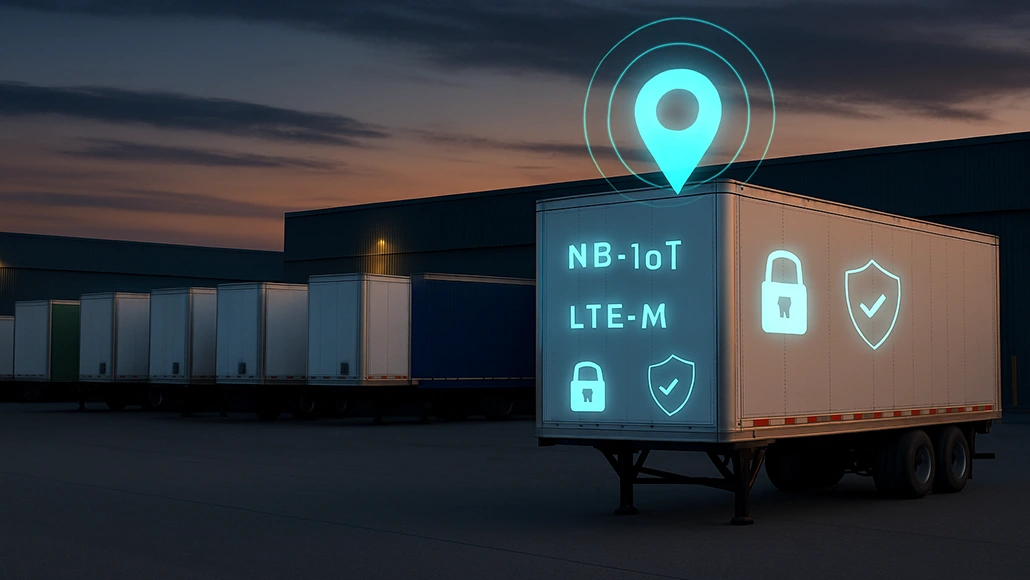
Not every network is the same. For long-life, low-power trackers NB-IoT and LTE-M now lead the market in the UK. NB-IoT is excellent for deep coverage and tiny periodic updates. LTE-M gives faster two-way links and better mobility for trailers that move between operators and across borders. If you need near real-time tracking and occasional remote commands, favour LTE-M. If you need a 5+ year battery and slow breadcrumb updates across a yard, NB-IoT usually makes more sense. Decide your reporting frequency first, then choose the radio. Recent LPWA guides give clear technical trade offs that are worth reading before buying hardware.
Installation: covert placement and tamper detection
Thieves will find obvious boxes. The best practice is simple. Hide the unit in a protected cavity and fit tilt and movement sensors so the system knows when someone is attempting removal. Industry guidance from logistics security groups also recommends redundancy: a tracker that can use more than one location method and trigger alerts from multiple sensors improves recovery chances. Covert mounting is not illegal, but sensible placement reduces removal risk and increases recovery rates.
Features that actually save money
Live location is the headline. The money is in the details. Geo-fence alerts that trigger immediate ops response stop unauthorised moves before they escalate. Tow detection and power-loss notifications let you act fast when something is stolen. Battery health reporting keeps devices reliable so you do not get blind spots. And integration with your TMS or fleet platform turns alerts into actions rather than emails that get ignored. Look for systems that push events into the tools you already use. That is where most ROI appears.
Security and data protection
A tracker that leaks credentials or ships unencrypted data is a liability. Follow the UK device security principles and treat firmware updates, credential management and encryption as mandatory, not optional. On privacy, be transparent. If tracking might reveal driver movements or personal data, run a data protection impact assessment and publish a policy. The Information Commissioner and safety bodies expect clear purpose and lawful processing. Get this wrong and you will have operational problems, legal headaches and distrust in the workforce.
Picking a supplier without being dazzled
Ignore buzzwords. Ask suppliers for three things you can test. One, a demo showing real-time alerts and the backend events feed. Two, examples of battery life from matched hardware in similar climates. Three, proof that their connectivity plan covers your usual routes in the UK and across borders you use. Demand documentation for firmware updates and device security. If a vendor cannot produce those things, move on. Market reports show large demand growth for trailer and container tracking but also show high churn where buyers chose hardware first and process second.
Final note
Trailers do not honk; they do not call when lost. They whisper through occasional signals. Your system needs to listen in the right way. Choose the radio that matches the route, make sure the hardware will survive the environment and lock down the data flows. Do those three and you will stop losing trailers and start using their movement to make better operational choices.
