


























Close
WORLD OF CONCRETE
Friday, December 19, 2025
JEC WORLD 2026

Growing Canadian Construction Sector Faces Labor Crunch

Note* - All images used are for editorial and illustrative purposes only and may not originate from the original news provider or associated company.

Subscribe

- Never miss a story with notifications

- Gain full access to our premium content

- Browse free from any location or device.

Media Packs

Expand Your Reach With Our Customized Solutions Empowering Your Campaigns To Maximize Your Reach & Drive Real Results!

– Access the Media Pack Now

– Book a Conference Call

Leave Message for Us to Get Back

Related stories

How To Choose Trailer GPS Units That Actually Work for UK Fleets

You know the drill. A trailer van goes missing...

Lifecycle Focused Construction Practices for Sustainable Infrastructure

Sustainable infrastructure development requires extending construction thinking beyond initial project completion to encompass the entire building lifecycle spanning decades of operation, maintenance, and eventual decommissioning. By integrating lifecycle cost analysis, selecting durable materials, designing for operational efficiency, planning for maintenance accessibility, and anticipating end-of-life material recovery, construction professionals create assets that deliver long-term value while minimizing environmental impact. This holistic approach transforms infrastructure from cost centers requiring perpetual maintenance into resilient assets that serve communities sustainably across generations.

Improving Construction Efficiency Without Compromising Quality

Achieving construction efficiency requires process-focused improvements that enhance productivity while maintaining or improving quality standards. Through workflow optimization, enhanced coordination mechanisms, quality management practices, and strategic technology integration, construction organizations deliver projects faster and more cost-effectively without sacrificing structural integrity or compliance. Balancing speed with excellence transforms construction management from a trade-off exercise into a synergistic approach where efficiency and quality reinforce one another.
- Advertisement -
Achema Middleeast

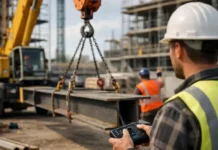
Canada is experiencing rapid growth, which has increased the demand for housing. However, this growth has put pressure on the construction industry, leading to a shortage of workers. Across the country, there are tens of thousands of unfilled construction jobs, with Ontario alone having up to 20,000 open positions. The Labourers’ International Union of North America (LiUNA) believes it could fill these positions if it could find the necessary workers.

The shortage of workers extends to various sectors within construction, including residential and high-rise construction, where laborers, bricklayers, cement finishers, and workers involved in trim and tile work are needed. As per insights, this shortage is just a partial snapshot of the larger construction labor crunch.

Moreover, the industry is facing a significant wave of retirements, with approximately 20% of Canada’s construction workers expected to retire within the next 10 years. However, this challenge is not unique to construction but is part of the broader labor supply challenges related to Canada’s aging workforce. To ensure the progress of construction projects, both the industry and government are closely monitoring the availability of workers now and in the future.

The construction labor shortage varies across different regions of Canada, with demographics being a core factor. The Prairie provinces, where the population skews younger, are projected to have a more balanced number of new recruits and retirements in the construction sector. However, British Columbia and Ontario face more significant challenges. In British Columbia, 38,000 veteran builders are expected to retire by 2032, while Ontario will see over 80,000 workers exit the industry during the same period. This poses a significant problem for Ontario, which aims to build 1.5 million new homes by 2031.

Efforts to address the construction labor shortage are underway. Ontario’s provincial government is intensifying the recruitment of skilled trade workers and encouraging more young people to enter the field. The province has seen a record number of apprenticeship sign-ups, representing a significant increase compared to the previous year. Meanwhile, New Brunswick and Prince Edward Island are also experiencing labor constraints in their construction industries, impacting housing supply and delaying projects.

The shortage of construction labor has cost implications and may cause project delays. Mandy Rennehan, a construction mogul, highlights that the scarcity of skilled labor in rural areas has driven up prices for related services, affecting homeowners, developers, and smaller contractors. To address the labor shortage, the industry can encourage young people to pursue trade careers and promote diversity by increasing the representation of underrepresented groups. Recruiting skilled workers from abroad, as prioritized by the Canadian government, is another potential solution.

Achema Middleeast

Latest stories

Related stories

How To Choose Trailer GPS Units That Actually Work for UK Fleets

You know the drill. A trailer van goes missing...

Lifecycle Focused Construction Practices for Sustainable Infrastructure

Sustainable infrastructure development requires extending construction thinking beyond initial project completion to encompass the entire building lifecycle spanning decades of operation, maintenance, and eventual decommissioning. By integrating lifecycle cost analysis, selecting durable materials, designing for operational efficiency, planning for maintenance accessibility, and anticipating end-of-life material recovery, construction professionals create assets that deliver long-term value while minimizing environmental impact. This holistic approach transforms infrastructure from cost centers requiring perpetual maintenance into resilient assets that serve communities sustainably across generations.

Improving Construction Efficiency Without Compromising Quality

Achieving construction efficiency requires process-focused improvements that enhance productivity while maintaining or improving quality standards. Through workflow optimization, enhanced coordination mechanisms, quality management practices, and strategic technology integration, construction organizations deliver projects faster and more cost-effectively without sacrificing structural integrity or compliance. Balancing speed with excellence transforms construction management from a trade-off exercise into a synergistic approach where efficiency and quality reinforce one another.

Training Strategies for Operating Advanced Construction Equipment

Modern construction equipment demands operator skills that extend far beyond basic machinery operation. Comprehensive training programs combining classroom instruction, simulator practice, and hands-on field experience prepare operators to safely and efficiently manage increasingly sophisticated equipment. Through structured certification approaches, ongoing skill development, and commitment to continuous learning, construction organizations develop operator competency that enhances project safety, productivity, and equipment longevity.

Subscribe

- Never miss a story with notifications

- Gain full access to our premium content

- Browse free from any location or device.

Media Packs

Expand Your Reach With Our Customized Solutions Empowering Your Campaigns To Maximize Your Reach & Drive Real Results!

– Access the Media Pack Now

– Book a Conference Call

Leave Message for Us to Get Back

Translate »