























Close
MCE 2026
Wednesday, January 28, 2026
JEC WORLD 2026

FIEC Says Revised Asbestos Directive Proposals Unworkable

Note* - All images used are for editorial and illustrative purposes only and may not originate from the original news provider or associated company.

Subscribe

- Never miss a story with notifications

- Gain full access to our premium content

- Browse free from any location or device.

Media Packs

Expand Your Reach With Our Customized Solutions Empowering Your Campaigns To Maximize Your Reach & Drive Real Results!

– Access the Media Pack Now

– Book a Conference Call

– Leave Message for Us to Get Back

Related stories

Digital Planning Tools for Building Envelope Systems

The complexity of modern architectural skins requires a fundamental shift in how we conceive, design, and manage the outer boundaries of our structures. By leveraging advanced digital planning platforms and integrated modeling environments, the construction industry can achieve unprecedented levels of precision, ensuring that every component of the structural perimeter is optimized for performance, durability, and long-term sustainability throughout its entire operational lifecycle.

Fire Safety and Compliance in Building Openings

The protection of life and property in the built environment depends heavily on the integrity of apertures within fire-rated compartments, where every door and window must function as a reliable barrier against the spread of heat and smoke. By strictly adhering to modern fire regulations and implementing rigorously tested opening systems, architects and developers can ensure a high level of passive fire protection that safeguards occupants and facilitates a more effective response from emergency services.

High Performance Windows Meeting Global Energy Codes Today

The implementation of superior fenestration technology is no longer an optional upgrade but a fundamental necessity for architectural projects aiming to achieve regulatory compliance and long-term sustainability. By integrating advanced glazing and framing solutions, buildings can significantly reduce their operational energy demand while providing occupants with enhanced comfort and durability against a backdrop of increasingly stringent global construction standards.
- Advertisement -
Advancing Prefabrication 2026

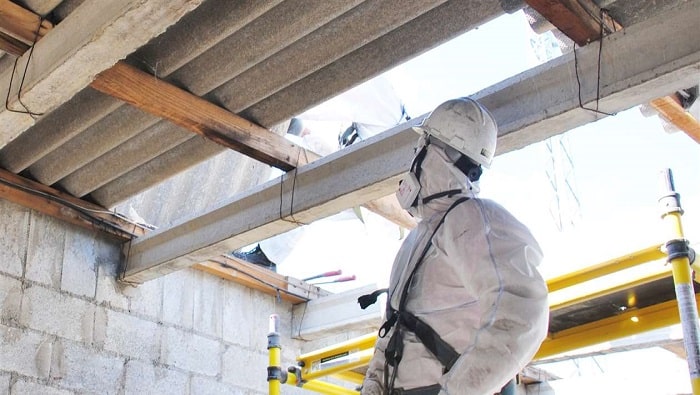
The European Construction Industry Federation- FIEC has renewed its warning that proposals within European Parliament’s revised asbestos directive look unrealistic and will prove costly for construction companies as well as their clients.

FIEC issued the statement with the European Parliament’s Employment and Social Affairs Committee and is expected to embrace a report on the directive’s revision.

When it comes to the centre of the debate, there is an expectation of lowering the occupational exposure limit value (OEL) by 100 times within 4 years of the refreshed directive coming into existence.

That said, FIEC is of the opinion that, according to some estimates, when it comes to the national level, lowering OEL by as much as 10 times over a period of many years has not even trebled but at times even quadrupled the cost of asbestos removal. As per the federation, these additional costs include the adoption of new as well as longer procedures, an elevated protective individual measurement process, the management of waste, as well as environmental and collective equipment.

By contrast, these costs do not take into consideration the additional costs implied for labs in order to buy better machines and also upskill the existing staff. Among other worrying elements, it is anticipated that the sporadic and low-intensity exposure concept will be slashed from the directive. This will, in all possibilities, lead to a market structure change, thereby pushing out most of the construction companies from the market that deal with asbestos temporarily, which will prove to be an advantage for the specialised companies.

 Protection when it comes to the health and safety of the workers has always been a top priority for the FIEC’s agenda, and it is not going to be any different this time around. That said, FIEC is extremely anxious that the European Parliament’s proposal may not be realistic at all when it comes to implementation by professionals and also with a risk that too expensive and hard rules will prove to be harmful for the companies as well as their clients so as to work within the legal gamut and for home owners as well when it comes to undertaking renovation works that are expensive.

A more realistic process will be sticking to the European Commission’s proposal for an OEL that is lowered to 0.01 fibres/cu cm, teamed with at least a five-year transition period. It is well to be noted that FIEC represents 32 national member federations across 27 countries and also construction companies of all sizes as well as international players carrying out all kinds of civil engineering and building activities.

Achema Middleeast

Latest stories

Related stories

Digital Planning Tools for Building Envelope Systems

The complexity of modern architectural skins requires a fundamental shift in how we conceive, design, and manage the outer boundaries of our structures. By leveraging advanced digital planning platforms and integrated modeling environments, the construction industry can achieve unprecedented levels of precision, ensuring that every component of the structural perimeter is optimized for performance, durability, and long-term sustainability throughout its entire operational lifecycle.

Fire Safety and Compliance in Building Openings

The protection of life and property in the built environment depends heavily on the integrity of apertures within fire-rated compartments, where every door and window must function as a reliable barrier against the spread of heat and smoke. By strictly adhering to modern fire regulations and implementing rigorously tested opening systems, architects and developers can ensure a high level of passive fire protection that safeguards occupants and facilitates a more effective response from emergency services.

High Performance Windows Meeting Global Energy Codes Today

The implementation of superior fenestration technology is no longer an optional upgrade but a fundamental necessity for architectural projects aiming to achieve regulatory compliance and long-term sustainability. By integrating advanced glazing and framing solutions, buildings can significantly reduce their operational energy demand while providing occupants with enhanced comfort and durability against a backdrop of increasingly stringent global construction standards.

Sustainable Materials Shaping Future Building Envelopes

The selection of environmentally responsible building components is fundamentally altering the trajectory of modern construction, moving away from carbon-intensive resources toward innovative, low-impact alternatives. By utilizing advanced bio-based composites, recycled metals, and high-performance insulation, designers are creating resilient structures that not only minimize their initial environmental footprint but also provide superior operational efficiency throughout their entire lifecycle.

Subscribe

- Never miss a story with notifications

- Gain full access to our premium content

- Browse free from any location or device.

Media Packs

Expand Your Reach With Our Customized Solutions Empowering Your Campaigns To Maximize Your Reach & Drive Real Results!

– Access the Media Pack Now

– Book a Conference Call

– Leave Message for Us to Get Back

Translate »