






























The European Commission has unveiled a standardised calculation framework that will fundamentally reshape how the construction industry measures and reports the environmental impact of building materials. The new regulation creates a level playing field across member states by establishing common rules for assessing greenhouse gas emissions throughout a building’s entire lifespan.
Announced on December 16, delegated regulation sets out a transparent methodology for measuring the life-cycle Global Warming Potential (GWP) of new buildings. The approach tracks environmental impact from the initial extraction of raw materials through manufacturing, transportation, construction, operation, maintenance, and finally demolition and waste processing.
Transparency in Material Selection
Construction professionals will soon operate under new requirements that make environmental performance visible at every stage of project planning. From 2028 onwards, new buildings larger than 1,000 square metres must declare their lifecycle carbon footprint through energy performance certificates. The scope expands to all new buildings by 2030, establishing uniform environmental accountability across the entire EU, thereby encouraging the adoption of low carbon construction materials.
This shift fundamentally alters procurement strategies. Material choices that were once driven primarily by cost and technical specifications now must account for measurable environmental impact. The framework pushes environmental performance into the same category as structural integrity and budget considerations.
Materials Innovation Receives Policy Support
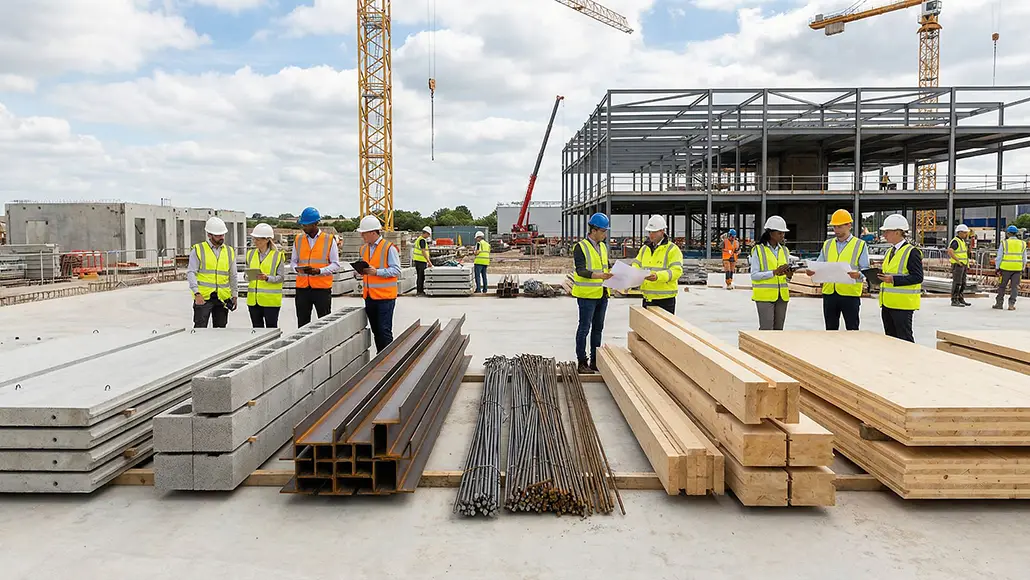
Low carbon construction material solutions are positioned to gain significant market traction. Clean steel, low-carbon cement, and timber-based construction methods now have quantifiable advantages within this standardised framework. The regulation particularly encourages circular economy principles, supporting material reuse, recycling initiatives, and carbon sequestration strategies that reduce both waste streams and embodied carbon.
Companies that invest in sustainable material technologies can now differentiate their products and services with credible, standardised data rather than competing marketing claims.
Practical Implementation Leverages Existing Infrastructure
The framework avoids creating burdensome new reporting requirements. Member states apply a consistent calculation methodology while maintaining flexibility to adjust regional parameters based on local conditions. Manufacturers supply product data through channels already established under EU construction products and energy labelling regulations, ensuring minimal disruption to existing business processes.
The Road to 2028
The regulation moves forward for a two-month parliamentary and council review, during which member states can formally object. An optional two-month extension may be triggered before the rules take effect. This review period provides crucial lead time for the construction sector to prepare systems, update procurement processes, and align supply chains with new environmental standards.
The framework signals that the EU is embedding climate accountability into construction practice as standard procedure.
