
























Close
MCE 2026
Tuesday, January 20, 2026
JEC WORLD 2026

Costain’s use of concrete sensors reduces formwork striking times by a third

Note* - All images used are for editorial and illustrative purposes only and may not originate from the original news provider or associated company.

Subscribe

- Never miss a story with notifications

- Gain full access to our premium content

- Browse free from any location or device.

Media Packs

Expand Your Reach With Our Customized Solutions Empowering Your Campaigns To Maximize Your Reach & Drive Real Results!

– Access the Media Pack Now

– Book a Conference Call

Leave Message for Us to Get Back

Related stories

Sustainable Construction Machinery for Low Emission Sites

Reducing the carbon footprint of the building sector requires a total reimagining of engine technology and energy consumption, leading to the rise of specialized machinery that balances power with environmental stewardship. By prioritizing low emission operation and energy-efficient designs, contractors are meeting the dual challenge of fulfilling ambitious infrastructure goals while adhering to increasingly stringent global climate regulations.

Digital Construction Sites Powered by Connected Equipment

The concept of a connected jobsite revolves around a unified digital ecosystem where every asset contributes real-time data to a centralized management hub, ensuring seamless coordination across large-scale projects. By integrating sophisticated data analytics and satellite-driven monitoring, the industry is moving toward a more transparent and highly optimized way of delivering complex infrastructure.

Automation Redefining Heavy Construction Equipment Operations

Removing the physical limitations of manual operation through sophisticated control logic allows heavy machinery to achieve tolerances and safety standards that were previously impossible, defining the new era of autonomous building. By transitioning toward self-correcting systems and remote-controlled assets, the sector is ensuring that complex infrastructure can be delivered with surgical precision and minimal human risk.
- Advertisement -
Advancing Prefabrication 2026

Costain, the infrastructure solutions company, has made significant time and efficiency savings for its customers after using new concrete sensor technology.

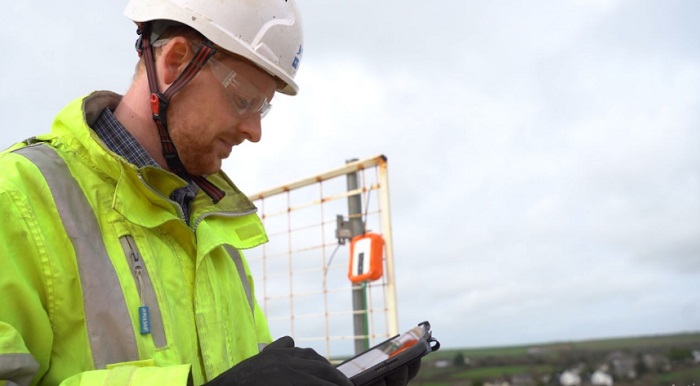
Costain’s materials engineers have been using Maturix’s concrete sensors to keep track of the strength and temperature of setting concrete. The technology has been deployed across a number of Costain’s projects in the road, water and rail sectors.

The Gaia 200 sensors, each the size of a large smartphone, send real-time temperature and strength data wirelessly to engineers, temporary works designers and other specialist contractors. This information helps them make faster, more informed decisions, for instance about when to remove the formwork following a concrete pour. The introduction of these sensors has reduced the length of time that the formwork is in place by around 33%, on average.

Traditionally, concrete pours are tested by physically removing cube samples to be examined under lab conditions, with a typical pour requiring around six cubes. The ability to record readings directly and accurately from sensors means that these tests are no longer required. One Costain project has used the sensors for more than 80 different pours and structures, eliminating the need to conduct destructive testing of approximately 500 strike cubes.

Bhavika Ramrakhyani, head of materials at Costain, commented: “We have an important role to play in maximising efficiency for our customers without compromising on quality or safety. It is important that our engineers have instant access to the right information at the right time, with crucial information sent directly to their devices and laptops. This means they can make informed decisions to accurately determine when it is safest to remove the temporary falsework and formwork after a pour.

“We’ve already seen enormous efficiency benefits. Programme delivery speeds have improved considerably, with striking times reduced by a third on sites where we have used the sensors. At the same time, the technology enables us to repurpose and reuse more of our temporary structures, as well as reducing the quantity of materials used, lowering our carbon footprint, which is another major benefit.”

Anojan Selvarajah, materials engineer at Costain, said: “We’re pouring more than a thousand cubic meters of concrete every week, so it’s important that we can safely and easily monitor concrete strength data with a high degree of accuracy throughout the construction cycle. As an engineer I found this system to be very reliable and user friendly to use on sites.”

Tobias Ejersbo, CEO at Maturix, added: “Costain has a fantastic heritage in UK infrastructure and a track record of innovating to realise greater efficiency. We are pleased that its engineers are seeing the benefits from using our real-time concrete monitoring system to keep track of the strength and temperature of dozens of pours across multiple different projects.

“As someone passionate about technology and not from a construction background, it is amazing to see how Maturix can help others with their passions. Construction is evolving at such an amazing rate we are so privileged to be part of the journey.”

Costain is an advocate of Production Thinking, which combines modern methods of construction with new technologies and materials, digital tools and smart decision making, all with the aim of driving productivity. More than a thousand people at Costain have completed production thinking e-learning training to further drive quality, predictability, safety and low carbon thinking into customer delivery teams.

Achema Middleeast

Latest stories

Related stories

Sustainable Construction Machinery for Low Emission Sites

Reducing the carbon footprint of the building sector requires a total reimagining of engine technology and energy consumption, leading to the rise of specialized machinery that balances power with environmental stewardship. By prioritizing low emission operation and energy-efficient designs, contractors are meeting the dual challenge of fulfilling ambitious infrastructure goals while adhering to increasingly stringent global climate regulations.

Digital Construction Sites Powered by Connected Equipment

The concept of a connected jobsite revolves around a unified digital ecosystem where every asset contributes real-time data to a centralized management hub, ensuring seamless coordination across large-scale projects. By integrating sophisticated data analytics and satellite-driven monitoring, the industry is moving toward a more transparent and highly optimized way of delivering complex infrastructure.

Automation Redefining Heavy Construction Equipment Operations

Removing the physical limitations of manual operation through sophisticated control logic allows heavy machinery to achieve tolerances and safety standards that were previously impossible, defining the new era of autonomous building. By transitioning toward self-correcting systems and remote-controlled assets, the sector is ensuring that complex infrastructure can be delivered with surgical precision and minimal human risk.

Electrification Trends Shaping Construction Equipment Fleets

Transitioning from internal combustion to battery-powered systems involves more than just swapping engines; it requires a comprehensive overhaul of fleet logistics, charging infrastructure, and energy management. As the industry moves toward a net-zero future, the adoption of specialized battery-powered machinery is proving to be a catalyst for cleaner, quieter, and more efficient urban construction.

Subscribe

- Never miss a story with notifications

- Gain full access to our premium content

- Browse free from any location or device.

Media Packs

Expand Your Reach With Our Customized Solutions Empowering Your Campaigns To Maximize Your Reach & Drive Real Results!

– Access the Media Pack Now

– Book a Conference Call

Leave Message for Us to Get Back

Translate »