

























Close
MCE 2026
Tuesday, January 20, 2026
JEC WORLD 2026

Cement Industry Critical To $20bn US Decarbonization Plan

Note* - All images used are for editorial and illustrative purposes only and may not originate from the original news provider or associated company.

Subscribe

- Never miss a story with notifications

- Gain full access to our premium content

- Browse free from any location or device.

Media Packs

Expand Your Reach With Our Customized Solutions Empowering Your Campaigns To Maximize Your Reach & Drive Real Results!

– Access the Media Pack Now

– Book a Conference Call

Leave Message for Us to Get Back

Related stories

Sustainable Construction Machinery for Low Emission Sites

Reducing the carbon footprint of the building sector requires a total reimagining of engine technology and energy consumption, leading to the rise of specialized machinery that balances power with environmental stewardship. By prioritizing low emission operation and energy-efficient designs, contractors are meeting the dual challenge of fulfilling ambitious infrastructure goals while adhering to increasingly stringent global climate regulations.

Digital Construction Sites Powered by Connected Equipment

The concept of a connected jobsite revolves around a unified digital ecosystem where every asset contributes real-time data to a centralized management hub, ensuring seamless coordination across large-scale projects. By integrating sophisticated data analytics and satellite-driven monitoring, the industry is moving toward a more transparent and highly optimized way of delivering complex infrastructure.

Automation Redefining Heavy Construction Equipment Operations

Removing the physical limitations of manual operation through sophisticated control logic allows heavy machinery to achieve tolerances and safety standards that were previously impossible, defining the new era of autonomous building. By transitioning toward self-correcting systems and remote-controlled assets, the sector is ensuring that complex infrastructure can be delivered with surgical precision and minimal human risk.
- Advertisement -
Advancing Prefabrication 2026

As part of US President Biden’s Investing in America Agenda, the US Department of Energy is all set to invest $20 billion as far as cleaning up US industries, including cement is concerned.

It is worth noting that the US Department of Energy- DOE is to invest over $20 billion in decarbonizing the US industry, with construction a major part of this.

The investment happens to be a part of President Biden’s Investing in America Agenda, which happens to be a comprehensive set of policy proposals that are designed to address important challenges that the US is facing, while at the same time promoting economic growth as well as resilience.

The decarbonization push will go on to focus on the highest emitting sectors, with cement, along with concrete, chemicals, and refining iron, as well as steel, among these.

Taken together, the Biden-Harris administration is looking to cut carbon emissions by over 14 million metric tons every year, which is equivalent to the yearly emissions coming from as many as 3 million petrol-powered cars.

Under the plan, six cement as well as concrete projects have been earmarked for inclusion. These, as per the DOE, will go on to roll out a comprehensive set of technologies that are capable of eliminating all CO2 emissions from plants.

All put together, the projects will go ahead and develop new pathways in order to make traditional Portland cement have lower or zero emissions and so as to pioneer new materials and also new mixtures that can go on to push the sector to zero emissions.

Zero emissions Portland cement happens to be the US goal

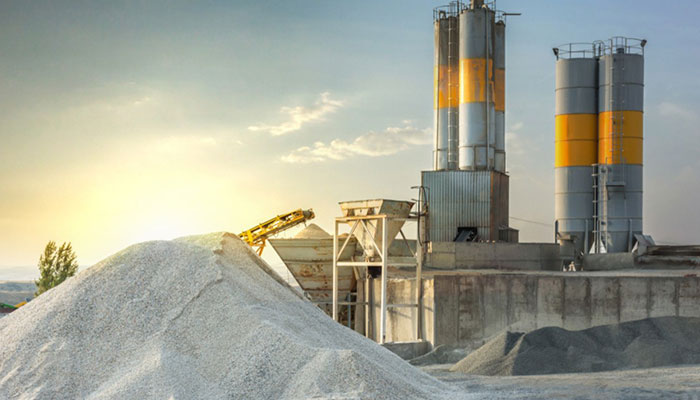
Portland cement happens to be the most common type of cement which is used in construction across the world. It happens to be a fine powder that is made from a mixture of limestone, clay, iron ore, and other ingredients, that happen to be heated in a kiln at massively high temperatures and then ground into a very fine powder that goes on to become Portland cement.

First manufactured in the early 19th century in England, it happens to be used for everything, such as building buildings, roads, bridges, and dams.

The DOE went on to say that this will help set the stage for a future where cement, which is one of the single largest sources when it comes to CO2 emissions across the world, can go on to be net-negative.

These game-changing projects are going to revolutionize a sector that has long relied on emissions-intensive processes for millennia.

It went on to say that the carbon-cutting initiatives will  go on to capture and sequester emissions from what is regarded to be the largest cement plants in the US and will also help pioneer chemistry changes so as to mitigate emissions at the source.

Their investments can fundamentally transform cement, says the DOE. It adds that cement happens to be the world’s most abundant man-made material as well as a building block of the world’s infrastructure.

Achema Middleeast

Latest stories

Related stories

Sustainable Construction Machinery for Low Emission Sites

Reducing the carbon footprint of the building sector requires a total reimagining of engine technology and energy consumption, leading to the rise of specialized machinery that balances power with environmental stewardship. By prioritizing low emission operation and energy-efficient designs, contractors are meeting the dual challenge of fulfilling ambitious infrastructure goals while adhering to increasingly stringent global climate regulations.

Digital Construction Sites Powered by Connected Equipment

The concept of a connected jobsite revolves around a unified digital ecosystem where every asset contributes real-time data to a centralized management hub, ensuring seamless coordination across large-scale projects. By integrating sophisticated data analytics and satellite-driven monitoring, the industry is moving toward a more transparent and highly optimized way of delivering complex infrastructure.

Automation Redefining Heavy Construction Equipment Operations

Removing the physical limitations of manual operation through sophisticated control logic allows heavy machinery to achieve tolerances and safety standards that were previously impossible, defining the new era of autonomous building. By transitioning toward self-correcting systems and remote-controlled assets, the sector is ensuring that complex infrastructure can be delivered with surgical precision and minimal human risk.

Electrification Trends Shaping Construction Equipment Fleets

Transitioning from internal combustion to battery-powered systems involves more than just swapping engines; it requires a comprehensive overhaul of fleet logistics, charging infrastructure, and energy management. As the industry moves toward a net-zero future, the adoption of specialized battery-powered machinery is proving to be a catalyst for cleaner, quieter, and more efficient urban construction.

Subscribe

- Never miss a story with notifications

- Gain full access to our premium content

- Browse free from any location or device.

Media Packs

Expand Your Reach With Our Customized Solutions Empowering Your Campaigns To Maximize Your Reach & Drive Real Results!

– Access the Media Pack Now

– Book a Conference Call

Leave Message for Us to Get Back

Translate »