

















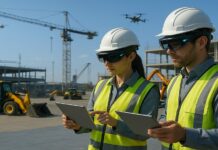




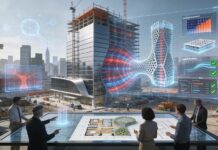
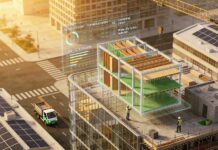
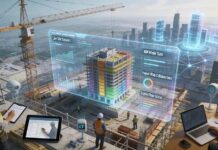

The integration of computational intelligence into the built environment marks a significant departure from traditional drafting and modeling techniques. By leveraging generative AI in construction design and planning, professionals are now able to navigate complex design constraints with a speed and precision that was previously unattainable. This technological shift does not merely automate existing tasks but rather introduces a collaborative paradigm where human intuition is augmented by algorithmic rigor. The result is a design process that considers thousands of permutations in the time it once took to develop a single concept. This evolution is not just about speed; it is about finding the “global optimum” in a sea of variables, ensuring that the buildings of tomorrow are more resilient, efficient, and beautiful than those of the past.
Evolution of Computational Design and Algorithmic Logic
For decades, the architectural community relied on computer-aided design to document ideas, but the core logic remained rooted in human input. The transition to generative systems represents a move toward goal-oriented design. Instead of drawing specific lines, architects define parameters such as site boundaries, environmental regulations, material costs, and structural requirements. The generative AI in construction design and planning then iterates through potential solutions, identifying the most efficient configurations that satisfy every constraint. This method ensures that the final design is not just aesthetically viable but also technically sound from its inception. We are moving away from a “top-down” approach where a form is decided and then engineered, toward a “bottom-up” approach where the form emerges from the requirements themselves.
Structural Performance and Resource Efficiency
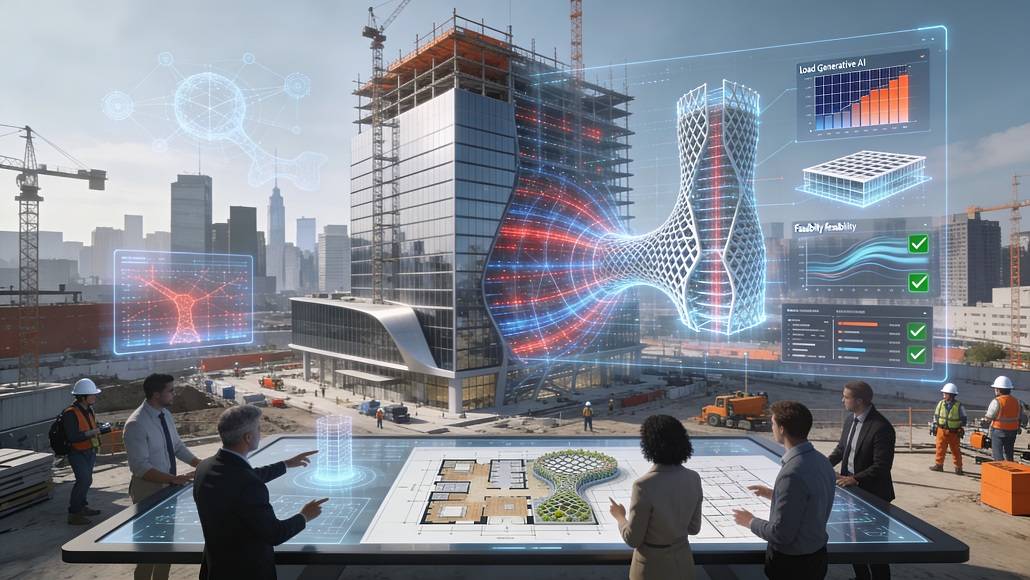
One of the most profound impacts of this technology is seen in the optimization of structural components. Generative algorithms can analyze load paths and material stress in real-time, suggesting geometries that use significantly less material without compromising safety. This focus on efficiency is crucial as the industry faces increasing pressure to reduce its environmental footprint. By using generative AI in construction design and planning to refine structural skeletons, developers can minimize the embodied carbon of their projects while achieving unique, organic forms that mimic natural growth patterns, a concept often referred to as biomimicry. These structures often look skeletal or web-like, as the AI removes material from areas where it is not structurally necessary, resulting in a weight-to-strength ratio that exceeds traditional beam-and-column designs.
Environmental Simulation and Solar Orientation
Beyond the physical structure, AI tools excel at simulating the interaction between a building and its environment. Thermal performance, daylighting, and wind patterns are integrated directly into the design loop. When applying generative AI in construction design and planning, architects can automatically orient a building to maximize natural light or optimize airflow for passive cooling. This level of foresight reduces the long-term energy demands of the structure, ensuring that sustainability is baked into the DNA of the building rather than added as an afterthought during the engineering phase. The AI can simulate thousands of solar positions throughout the year to determine the exact angle of every window and shading device, ensuring that occupants enjoy comfort while minimizing reliance on HVAC systems.
Enhancing Feasibility Studies and Cost Management
The planning phase of any construction project is fraught with financial uncertainty. Generative systems provide a robust framework for assessing the feasibility of different design choices before a single brick is laid. By linking design iterations to real-world cost databases, generative AI in construction design and planning allows stakeholders to see the immediate financial impact of changing a layout or selecting a different material. This transparency fosters a more informed decision-making process, reducing the likelihood of budget overruns and project delays that typically plague large-scale developments. In the past, a major design change in the middle of a project could be catastrophic; today, the AI can re-calculate the entire project’s budget and timeline in seconds, allowing for agile responses to changing market conditions or client requests.
The Technological Underpinnings: GANs and Diffusion Models
To understand the power of this movement, one must look at the underlying technologies. Modern generative AI in construction design and planning often utilizes Generative Adversarial Networks (GANs) and Diffusion Models. GANs work by having two neural networks compete one generates designs while the other evaluates them against a dataset of successful historical projects. This competition drives the system to produce results that are both innovative and grounded in reality. Diffusion models, on the other hand, start with “noise” and refine it into a detailed architectural plan based on textual or parametric prompts. These technologies allow the AI to not just “calculate” but to “imagine” possibilities that follow the complex logic of architectural history and engineering standards, effectively bridging the gap between artistic vision and scientific data.
Human-AI Collaboration: The Designer as Curator
A common misconception is that AI will replace the architect. On the contrary, generative AI in construction design and planning empowers the human professional to move from a “drafter” to a “curator.” The architect’s role becomes one of defining high-level goals, ethical constraints, and aesthetic preferences. The AI handles the tedious computation and optimization, presenting the architect with a “shortlist” of the most viable options. This frees the designer to focus on the human experience of the space how it feels to walk through a room, the emotional impact of a view, and the social dynamics of the building. The machine provides the data-driven foundation, but the human provides the soul and the context that no algorithm can yet replicate.
Navigating Regulatory Compliance and Building Codes
One of the most complex tasks in planning is ensuring that every design iteration complies with local zoning laws, fire safety codes, and accessibility standards. Generative AI in construction design and planning can be pre-programmed with these regulatory databases. As it generates designs, it automatically “filters out” any options that violate a code. For example, if a design suggests a staircase that is too narrow for fire safety, the AI will automatically widen it or find an alternative route. This “compliance-by-design” approach drastically reduces the time spent in the permitting phase and eliminates the risk of discovering a violation after construction has already begun, which is one of the primary causes of expensive legal disputes in the industry.
Case Studies: From Residential to Mega-Projects
The practical application of generative AI in construction design and planning is already visible in some of the world’s most innovative projects. In the residential sector, developers are using AI to optimize floor plans for small-scale apartments, ensuring that every square foot is utilized to maximize living space and natural light. On the other end of the spectrum, mega-projects like smart cities and transportation hubs are using generative logic to coordinate the massive interplay between structural integrity, pedestrian flow, and utility distribution. One notable example involved the design of a stadium roof where AI identified a lattice structure that saved 30% in steel costs while providing superior acoustic properties. These real-world successes are proving that AI is not a futuristic concept but a current necessity for competitive construction firms.
Global Trends and the Future of Urban Densification
As the world’s population continues to urbanize, the demand for high-density, high-efficiency housing is skyrocketing. Generative AI in construction design and planning is uniquely suited to solve the “urban puzzle.” By analyzing topographical data and urban heat maps, AI can suggest building shapes that minimize shadows on neighboring properties while maximizing the density of units. This ability to balance conflicting urban needs density vs. livability, growth vs. sustainability will be the defining challenge of 21st-century planning. The future of our cities will likely be shaped by algorithms that understand how to cram the maximum amount of human potential into a limited space without sacrificing the quality of the environment.
Conclusion: A Paradigm Shift in the Built Environment
We are witnessing a historical pivot point in how we create our world. The adoption of generative AI in construction design and planning is not a temporary trend but a fundamental shift in the industry’s methodology. By embracing the synergy between algorithmic precision and human creativity, we can build structures that are lighter, stronger, and more attuned to the needs of both people and the planet. The construction firms that master these tools today will be the ones that define the architectural legacy of the next century. As we look forward, the line between “built by man” and “designed by machine” will continue to blur, resulting in a built environment that is smarter, more responsive, and infinitely more efficient.
