




























The modern built environment is a place where most individuals spend up to 90% of their lives. Consequently, the quality of the air we breathe indoors has a profound impact on our health, productivity, and overall wellbeing. As buildings have become more airtight to improve energy efficiency, the need for sophisticated ventilation strategies healthy building environments has become more critical than ever. Effective airflow management is no longer just about thermal comfort; it is a fundamental pillar of indoor air quality construction. By integrating advanced building ventilation systems, architects and engineers can create healthy buildings that actively reduce the concentration of pollutants, pathogens, and carbon dioxide, fostering an environment where occupants can thrive.
The Evolution of Airflow Management and Indoor Air Quality
To appreciate the importance of modern ventilation strategies healthy building environments, one must first understand how our approach to indoor air has changed over time. Historically, buildings relied on natural ventilation through leaky windows and doors. While this provided plenty of fresh air, it was highly inefficient and difficult to control. The shift toward mechanical building ventilation systems allowed for more precise control over temperature and humidity, but it also led to the rise of “Sick Building Syndrome” when ventilation rates were reduced to save energy. Today, the focus of indoor air quality construction is on finding the optimal balance between energy efficiency and the health-promoting benefits of high-quality airflow management, ensuring that every occupant has access to clean, filtered air at all times.
Key Components of Modern Building Ventilation Systems
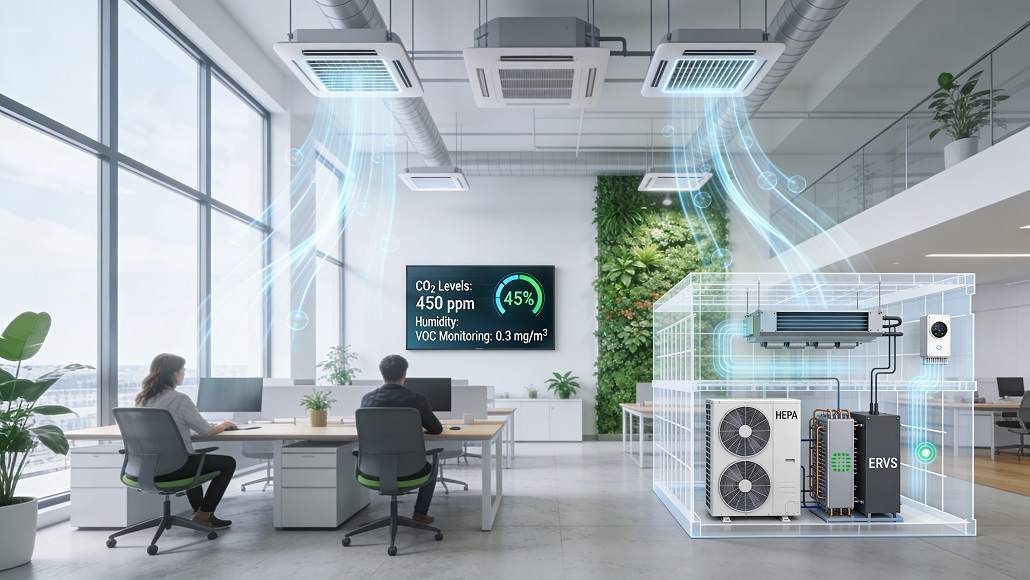
The success of ventilation strategies healthy building environments depends on a combination of mechanical and passive elements. A typical building ventilation system includes air handling units (AHUs), ductwork, filters, and sensors that monitor everything from CO2 levels to volatile organic compounds (VOCs). High-efficiency particulate air (HEPA) filters are increasingly common in healthy buildings, as they can remove 99.97% of airborne particles, including bacteria and viruses. Furthermore, the integration of energy recovery ventilators (ERVs) allows for the exchange of heat and moisture between incoming and outgoing air streams, which significantly improves the efficiency of airflow management without compromising the delivery of fresh outdoor air to the interior spaces.
The Impact of Airflow on Occupant Health and Cognitive Performance
The primary goal of ventilation strategies healthy building environments is the protection of human health. Poor indoor air quality construction can lead to a range of issues, from minor headaches and fatigue to chronic respiratory conditions and increased transmission of infectious diseases. Beyond physical health, there is a growing body of research highlighting the link between airflow management and cognitive function. Studies have shown that in buildings with higher ventilation rates and lower CO2 levels, occupants perform significantly better on tasks requiring strategic thinking, information usage, and crisis response. By investing in superior building ventilation systems, organizations can directly enhance the performance and decision-making capabilities of their workforce, making healthy buildings a key asset for business success.
Strategies for Integrating Passive and Active Ventilation
The most effective ventilation strategies healthy building environments often utilize a hybrid approach, combining the reliability of mechanical systems with the energy-saving benefits of natural ventilation. This is known as “mixed-mode” ventilation. During periods of mild weather, the building’s control system can automatically open windows and vents to provide fresh air, reducing the load on the mechanical building ventilation systems. This not only saves energy but also provides occupants with a greater sense of connection to the outdoors. Successful indoor air quality construction in mixed-mode buildings requires sophisticated airflow management software that can account for wind speed, outdoor temperature, and internal heat loads to ensure consistent comfort and air quality throughout the structure.
Addressing the Challenges of Urban Indoor Air Quality Construction
In dense urban environments, the implementation of ventilation strategies healthy building environments is complicated by outdoor air pollution and noise. Drawing in fresh air from a busy street can introduce particulate matter and traffic fumes into the building. To overcome this, advanced building ventilation systems utilize multi-stage filtration and carbon scrubbing technology to clean the incoming air before it reaches the occupants. Additionally, the strategic placement of air intakes often at the roof level or away from primary pollution sources is a critical part of airflow management in cities. These healthy buildings act as a refuge from the urban environment, providing a sanctuary of clean air that is essential for the long-term health of city dwellers.
Smart Sensors and the Future of Demand-Controlled Ventilation
The future of ventilation strategies healthy building environments lies in the use of real-time data and artificial intelligence. Traditional building ventilation systems often operate on a fixed schedule, which can lead to over-ventilation of empty spaces and under-ventilation of crowded ones. Demand-controlled ventilation (DCV) uses a network of smart sensors to monitor occupancy levels and air quality in real-time, adjusting the airflow management accordingly. This ensure that healthy buildings are always providing the right amount of air to the right places, maximizing occupant comfort while minimizing energy waste. As sensors become more accurate and less expensive, this data-driven approach will become the standard for indoor air quality construction in all types of commercial and residential projects.
The Role of Ventilation in the Post-Pandemic Architectural Landscape
The global health events of recent years have brought the importance of ventilation strategies healthy building environments into sharp focus. There is now a widespread understanding that the way we design and operate our building ventilation systems can directly influence the spread of airborne pathogens. In response, many building codes and standards are being updated to require higher ventilation rates and better filtration. Healthy buildings are now being designed with a “wellness-first” mindset, where the quality of the indoor environment is given the same priority as structural integrity and aesthetic design. This shift is driving a renaissance in indoor air quality construction, leading to innovations in ultraviolet germicidal irradiation (UVGI) and other advanced airflow management techniques that can further neutralize airborne threats.
Integrating Biophilic Design with Airflow Management
A holistic approach to ventilation strategies healthy building environments often incorporates elements of biophilic design. The use of indoor plants and living walls can complement mechanical building ventilation systems by naturally absorbing CO2 and certain VOCs. While plants cannot replace a robust airflow management system, they contribute to a healthier indoor air quality construction by increasing humidity and providing psychological benefits to the occupants. Healthy buildings that combine advanced technology with natural elements create a more restorative and pleasant environment. This synergy between nature and engineering is a key characteristic of the next generation of sustainable architecture, where every aspect of the building is designed to support the flourishing of human life.
Ensuring Long-Term Performance through Maintenance and Monitoring
Even the most sophisticated ventilation strategies healthy building environments will fail to deliver results if they are not properly maintained. Regular inspections of building ventilation systems are essential to ensure that filters are clean, sensors are calibrated, and fans are operating efficiently. Continuous monitoring of indoor air quality construction is also vital, as it allows facility managers to identify and resolve issues before they impact the health of the occupants. By making airflow management a priority throughout the entire lifecycle of the building, property owners can ensure that their healthy buildings remain safe, comfortable, and productive for years to come. This commitment to ongoing performance is the final, and perhaps most important, piece of the puzzle in the creation of truly healthy indoor environments.
