



























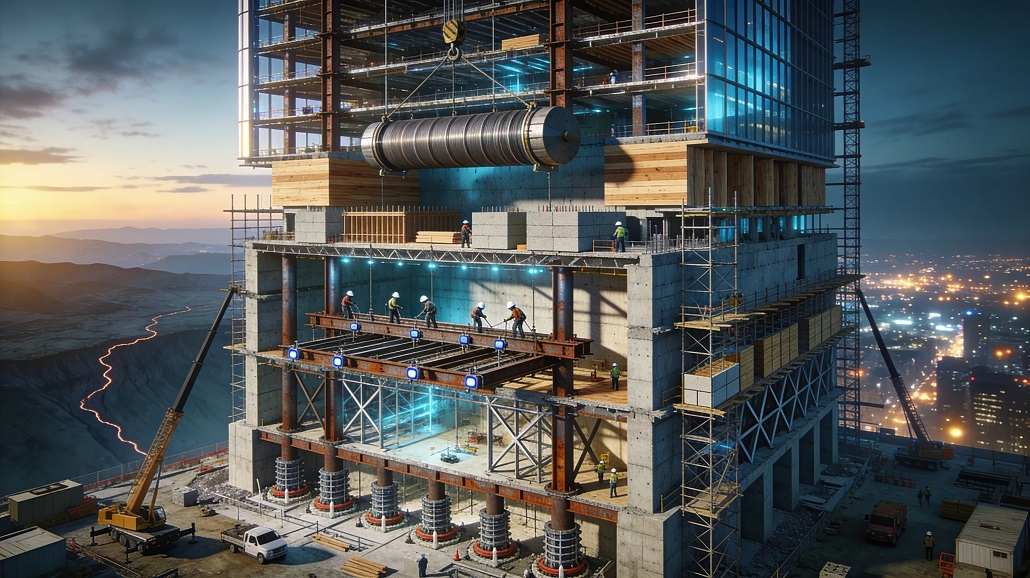

The architectural history of human civilization is a narrative of conquering height and volume, a feat made possible only through the continuous advancement of structural support systems building stability. In the modern era, where skyscrapers pierce the clouds and sprawling complexes span entire city blocks, the internal skeleton of a building is the silent guardian of human safety. These complex engineering systems are designed to manage a symphony of forces, from the relentless pull of gravity to the unpredictable horizontal pressures of wind and seismic activity. By integrating high-performance structural support solutions with innovative building framework systems, engineers can create resilient environments that stand the test of time and nature.
The fundamental mechanics of load distribution and structural integrity
At the heart of any stable building lies the principle of load paths. Every ounce of weight, whether it is the dead load of the materials themselves or the live load of people and furniture, must find a reliable route to the foundation. Structural support systems building stability are the networks that facilitate this journey. Vertical components like columns and load-bearing walls handle the primary compression forces, while horizontal elements such as beams and girders manage the bending and shear stresses. The efficiency of these load support structures determines the building’s overall footprint and aesthetic potential; a more efficient system allows for larger spans and thinner profiles, enabling the soaring, open-concept designs that characterize contemporary architecture.
While gravity is constant, lateral forces those acting horizontally are dynamic and often catastrophic if not properly addressed. In high-rise construction, wind loads become the dominant design factor, acting like a giant lever against the height of the building. Structural support systems building stability must therefore incorporate specialized lateral resistance mechanisms. Building framework systems such as braced frames, shear walls, and moment-resisting frames are the primary tools in an engineer’s arsenal. Braced frames utilize diagonal members to create rigid triangles that prevent sway, while shear walls, often made of reinforced concrete, act as stiff vertical plates that absorb and dissipate horizontal energy. The selection of these engineering systems depends on the building’s height, location, and the specific geological threats of the region.
Innovative structural support solutions in seismic-prone regions
In areas susceptible to earthquakes, the challenge for structural support systems building stability becomes even more complex. A rigid building may snap under the sudden, violent movements of the ground, whereas a building that is too flexible might suffer extensive non-structural damage. Modern structural support solutions now frequently include base isolation and tuned mass dampers. Base isolation essentially “decouples” the building from its foundation using flexible bearings, allowing the ground to move while the structure remains relatively still. Similarly, tuned mass dampers massive weights suspended near the top of a skyscraper counteract the building’s oscillation during a quake or high wind. These advanced load support structures are the pinnacle of engineering systems, ensuring that even the tallest towers remain stable in the most demanding environments.
The evolution of materials science in structural support systems
The capacity of structural support systems building stability is inherently limited by the properties of the materials used to construct them. The transition from masonry to steel and reinforced concrete marked a turning point in building framework systems, allowing for heights that were previously inconceivable. Today, the industry is seeing the emergence of ultra-high-performance concrete (UHPC) and carbon-fiber-reinforced polymers. These materials offer unprecedented strength-to-weight ratios, allowing for load support structures that are both lighter and stronger than their traditional counterparts. By incorporating these materials into structural support solutions, architects can push the boundaries of form and function, creating cantilevered sections and complex geometries that still maintain absolute structural stability.
The role of engineering systems in modular and adaptive construction
As the construction industry shifts toward more sustainable and faster delivery methods, the role of structural support systems building stability has adapted to modularity. Pre-engineered building framework systems are now manufactured in controlled factory environments, ensuring a level of precision that is difficult to achieve on a busy construction site. These modular structural support solutions are designed to be bolted or welded together with extreme accuracy, creating a seamless and stable whole. Furthermore, the concept of adaptive reuse transforming old industrial buildings into modern offices or lofts requires a deep understanding of existing load support structures. Engineers must often reinforce these older engineering systems with carbon fiber wraps or additional steel bracing to meet modern stability standards, breathing new life into historical architecture.
Digital twins and the monitoring of load support structures
The longevity of structural support systems building stability is no longer left to chance or periodic manual inspections. The integration of Building Information Modeling (BIM) and digital twin technology allows for the creation of a virtual counterpart to the physical structure. Throughout the building’s lifecycle, sensors embedded within the load support structures provide real-time data on stress, strain, and vibration. This allows for proactive maintenance of the engineering systems, identifying potential issues before they become structural failures. These smart structural support solutions represent a paradigm shift in how we manage the built environment, moving from a reactive model to a predictive one that ensures building stability is maintained throughout its entire functional existence.
Economic and social implications of structural stability
The importance of structural support systems building stability extends far beyond the technical realm of engineering; it has profound economic and social consequences. A building that is perceived as unstable or prone to failure is an unmarketable asset. Conversely, structures that utilize high-quality building framework systems and structural support solutions command higher rents and attract more prestigious tenants. From a social perspective, the stability of the built environment is a cornerstone of public trust. When engineering systems fail, the loss of life and property is devastating, leading to a breakdown in community confidence. Therefore, investing in superior load support structures is not just a technical requirement but a moral and economic imperative for any developer or municipality.
Future trends in structural support systems and sustainability
As we look toward the future, the focus of structural support systems building stability is increasingly merging with the goals of environmental sustainability. The production of steel and concrete is energy-intensive, and engineers are searching for ways to reduce the carbon footprint of building framework systems without sacrificing safety. Mass timber is emerging as a viable, carbon-sequestering alternative for mid-rise and even high-rise structures. When engineered correctly, these timber-based structural support solutions can provide the same level of fire resistance and structural stability as traditional materials. The future of engineering systems lies in this balance developing load support structures that are not only resilient and stable but also in harmony with the natural environment, ensuring a safe and sustainable future for our cities.
Conclusion: The integration of engineering systems for lasting stability
In conclusion, the efficacy of structural support systems building stability is the foundation upon which all modern architecture is built. By masterfully combining diverse structural support solutions, from traditional shear walls to advanced base isolation, engineers create the building framework systems that protect our lives and investments. These load support structures are not static elements but dynamic engineering systems that evolve with technology and material science. As our ambitions grow and our buildings reach ever higher, the science of stability will remain the most critical component of the construction process, ensuring that the landmarks we build today remain as the resilient monuments of tomorrow.
