




























Key Takeaways:
- Acoustic performance in dense urban developments requires a dual strategy of sound insulation (to block exterior noise) and sound absorption (to manage interior reverberation) using high-mass and porous materials.
- Techniques like decoupling and the use of laminated acoustic glazing are essential for preventing the transmission of vibrations through a building’s structure, creating high-value quiet zones in noisy urban corridors.
- Prioritizing sustainable, low-VOC acoustic materials not only improves the comfort and mental health of occupants but also aligns with global wellness and environmental standards, enhancing the long-term viability of the project.
Acoustic Performance Materials for Urban Developments
As the world’s population continues to migrate toward cities, the density of our urban centers is reaching unprecedented levels. This concentration of people, transportation, and industry has made noise pollution one of the most significant challenges for modern architecture. High-quality urban living is no longer just about aesthetics and location; it is increasingly defined by the “acoustic comfort” of the indoor environment. The sophisticated acoustic performance materials urban developments require are the silent heroes of the built environment, working behind the scenes to block the roar of traffic, the hum of mechanical systems, and the sound of neighbors in adjacent units. By creating a peaceful sanctuary in the heart of the city, these materials are essential for the physical and mental well-being of urban dwellers.
The Science of Sound in the Urban Environment
To manage noise effectively, engineers must address two different types of sound: “airborne sound” and “impact sound.” Airborne sound, such as voices, music, or sirens, travels through the air and enters a building through gaps, windows, and thin walls. Impact sound, like footsteps or furniture moving, is caused by physical contact with the structure and travels as a vibration through the floor and walls. The acoustic performance materials urban developments utilize are designed to tackle both types of noise using the principles of mass, absorption, and “decoupling.” By breaking the path of sound energy, these materials ensure that what happens outside stays outside.
Mass and Density in Sound Insulation
The most basic principle of soundproofing is that “mass blocks sound.” High-density materials like specialized acoustic gypsum board, mass-loaded vinyl (MLV), and concrete are incredibly effective at reflecting sound energy back toward its source. However, in modern lightweight construction, adding heavy mass is not always feasible. This has led to the development of “high-performance acoustic performance materials” that pack significant density into very thin profiles. These materials are often used to line walls, ceilings, and even pipes to prevent the “transmission” of noise from one space to another, significantly improving the Sound Transmission Class (STC) rating of the building assembly.
Decoupling and the “Room within a Room” Concept
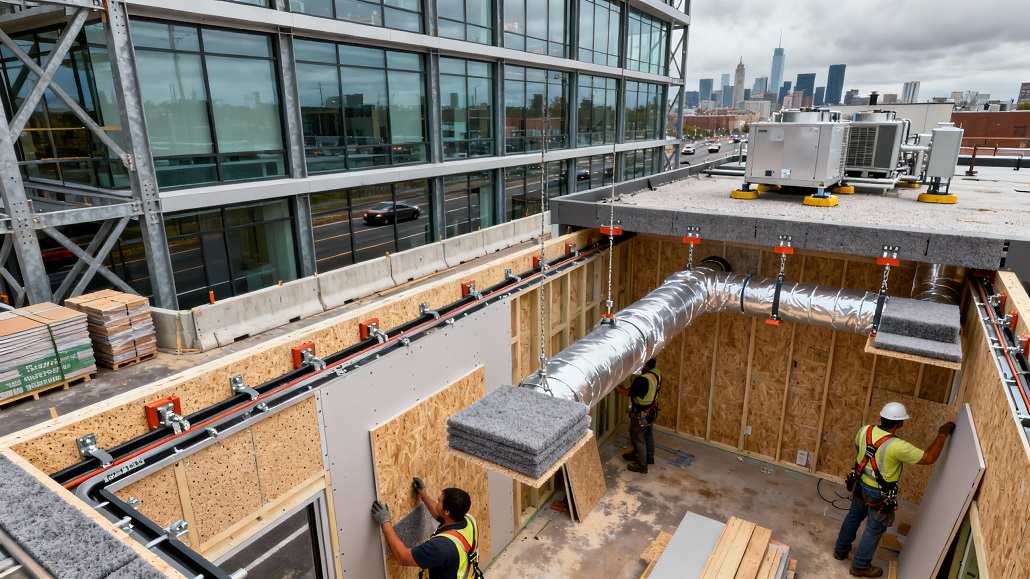
Even the thickest wall can fail if the structural members are connected, as sound vibrations will simply travel through the studs and joists. To combat this, acoustic performance materials urban developments employ “decoupling” techniques. This involves the use of resilient channels, sound isolation clips, and specialized gaskets that create a physical break between the interior drywall and the structural frame. This “decoupled” system prevents vibrations from passing through the building’s skeleton, effectively creating a “room within a room.” This technique is essential for high-end residential and commercial projects where complete acoustic privacy is a primary requirement.
Addressing the Impact of Mechanical and HVAC Noise
In a large urban building, the mechanical systems elevators, air conditioners, and plumbing can be a major source of noise. The acoustic performance materials urban developments depend on include specialized vibration isolation mounts for heavy machinery and acoustic liners for ductwork. These materials ensure that the vibrations from a rooftop chiller don’t resonate through the entire structure. Furthermore, the use of cast iron or high-density plastic for drainage pipes, combined with specialized acoustic wraps, prevents the “flushing” noise that is a common complaint in multi-unit housing. This attention to detail in mechanical acoustics is what defines a truly premium urban development.
Advanced Glazing and Window Systems
The facade is the most critical line of defense against exterior noise. Standard double-glazing provides some protection, but high-noise environments like those near airports or train lines require specialized acoustic glazing. These windows use “laminated glass,” where two or more layers of glass are bonded with a specialized acoustic interlayer, such as polyvinyl butyral (PVB). This interlayer acts as a shock absorber that dampens sound vibrations as they pass through the glass. When combined with triple-glazing and high-quality weather sealing, these acoustic performance materials urban developments feature can reduce exterior noise by up to 50 decibels, turning a noisy street into a quiet library.
The Importance of Sound Absorption and Interior Comfort
Soundproofing blocks noise from entering a room, but sound “absorption” manages the noise created within the room. In open-plan offices and modern apartments with hard surfaces like polished concrete and glass, sound can bounce around, creating echoes and high levels of reverberation. To improve interior comfort, designers use acoustic performance materials urban developments offer such as acoustic ceiling clouds, wall panels made from recycled wood fibers or PET felt, and even “acoustic furniture.” These porous materials soak up sound energy, reducing noise levels and making conversations clearer and more pleasant. This balance of insulation and absorption is what creates a truly high-performance acoustic environment.
Acoustics and the Well-Being of Occupants
The impact of noise on health is well-documented. Chronic exposure to high noise levels can lead to stress, sleep deprivation, and reduced productivity. In the context of dense urban living, the quality of the acoustic performance materials urban developments choose has a direct impact on the quality of life of the residents. By providing a quiet environment for sleep and work, developers are not just building apartments; they are building healthy communities. This focus on “wellness” is becoming a major driver in the real estate market, with acoustic certifications (like Quiet Mark or WELL building standards) becoming highly sought after by buyers and tenants.
Sustainability and Eco-Friendly Acoustic Solutions
The modern construction industry is also demanding that acoustic performance materials be sustainable. Many of the most effective sound-absorbing materials are now made from recycled content, such as plastic bottles, denim, or renewable resources like cork and wood. These “green” acoustic performance materials urban developments are adopting provide excellent performance without the environmental cost of traditional mineral wool or fiberglass. Furthermore, many of these materials are low-VOC and free from harmful chemicals, ensuring a healthier indoor air quality. This synergy between acoustic comfort and environmental responsibility is the future of urban construction.
Integrated Design and Early Acoustic Planning
Acoustics should never be an afterthought. The most successful urban projects are those where acoustic performance materials are integrated into the design from day one. This allows architects to choose the right floor-to-floor heights, structural systems, and facade designs to optimize the acoustic outcome. By working with acoustic consultants during the planning phase, developers can avoid expensive retrofits and ensure that the building meets all local noise regulations and market expectations. This holistic approach to acoustic performance materials urban developments require is what ensures long-term asset value and tenant satisfaction.
The Crux of Urban Comfort
In conclusion, the ability to thrive in a dense city environment depends on our ability to manage the soundscape around us. The sophisticated acoustic performance materials urban developments utilize are the key to unlocking the full potential of urban living. By combining mass, decoupling, and absorption, we can create buildings that are not just structures, but true sanctuaries from the chaos of the city. The core of this achievement the acoustic performance materials urban developments remains the essential foundation for a more comfortable, productive, and healthy urban future.
