


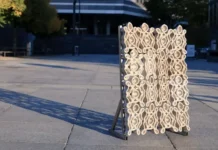



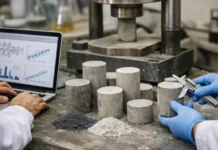



















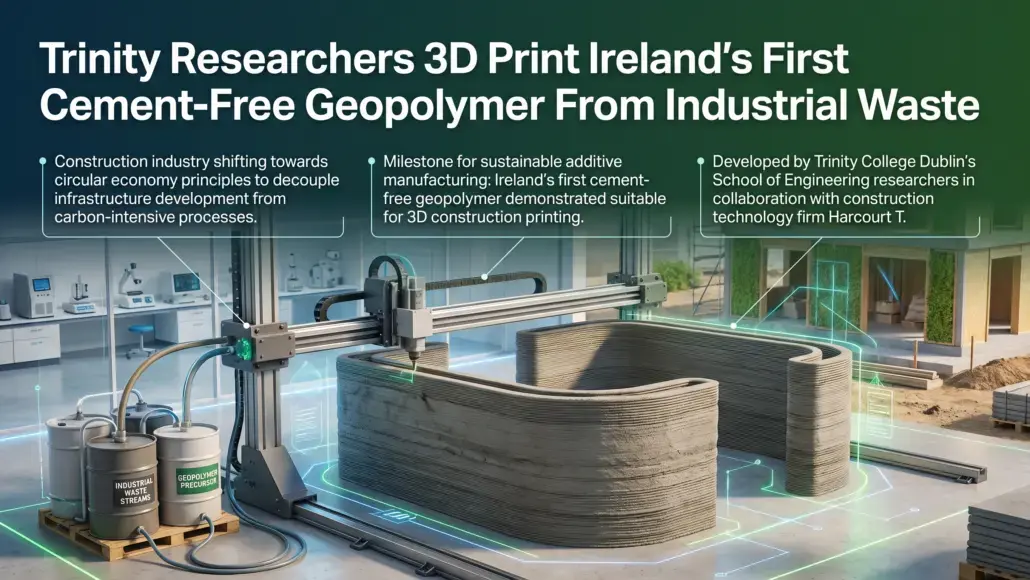


The global construction industry is increasingly shifting toward circular economy principles as the sector seeks to decouple infrastructure development from carbon-intensive manufacturing processes. In a milestone for sustainable additive manufacturing, researchers at Trinity College Dublin’s School of Engineering have successfully demonstrated Ireland’s first cement-free geopolymer suitable for 3D construction printing. Developed in collaboration with construction technology firm Harcourt Technologies Ltd (HTL), the trial confirms the viability of transforming industrial by-products into high-value building components. The material, which utilizes bauxite refining residue as a primary component, was successfully mixed, pumped, and extruded at HTL’s facility, marking a significant advancement in the search for low-carbon alternatives to traditional Portland cement.
The environmental implications of this breakthrough are substantial, as the construction sector continues to grapple with the high embodied carbon of conventional clinker-based cements. The newly developed cement-free geopolymer contains no Portland cement, with more than 30% of its reactive content derived from local industrial waste that would otherwise be destined for landfill or long-term storage. Preliminary assessments suggest that this geopolymer-based approach could reduce embodied carbon emissions by approximately 70% compared to standard concrete mixes. Beyond the immediate carbon savings, the additive manufacturing process offers additional efficiencies by eliminating the need for molds and formwork, reducing onsite waste, and allowing for the creation of complex geometries that are technically difficult to achieve using traditional casting methods.
Technical Versatility and Environmental Benefits
The significance of the research lies in the creation of a flexible binder platform that can be customized for specific mechanical and structural requirements. Sara Pavia, Professor at Trinity College Dublin’s School of Engineering, emphasized the dual advantages of the material during the trial. “Broadly speaking, this successful trial demonstrates how local industrial residues can be transformed into functional, adaptable and visually distinctive construction materials,” Pavia stated. “And because the material and method of production and printing essentially delivers two environmental benefits: it reduces dependence on carbon-intensive clinker cements, and creates a high-value use for industrial residues.”
The rheology and setting behavior of the geopolymer can be tailored to accommodate various manufacturing processes, making it a versatile asset for the future of digital fabrication. Prof. Pavia further noted that the material is not merely a cement replacement but a sophisticated binder platform whose “composition, rheology, setting behaviour and early-age performance can be tailored to different manufacturing processes and construction applications.” This flexibility is critical for ensuring that sustainable materials can meet the rigorous performance standards required for modern industrial-scale construction.
Industrial Scaling and Consortium Collaboration
The transition from laboratory-scale innovation to widespread industrial application is being driven by a broad consortium of industry leaders. Funded by Research Ireland, the project includes expertise from Harcourt Technologies Ltd alongside major partners such as SISK, FLI Precast Solutions, McGrath Quarries, Techcrete, and Roadstone. SISK currently leads the industrial consortium, which is tasked with scaling the low-carbon material for use in commercial construction environments. The collaboration spans the entire supply chain, integrating expertise in material development, concrete production, precast manufacturing, and digital fabrication to ensure the geopolymer meets the needs of large-scale infrastructure projects.
The next phase of the initiative will focus on bridging the gap between controlled laboratory batches and the high-volume consistency required for industrial printing equipment. This stage of the research will introduce variables related to long-term durability, mechanical performance, and reinforcement compatibility. Furthermore, the consortium will address critical hurdles regarding process control and regulatory compliance to facilitate the formal adoption of geopolymer technology in Ireland’s construction sector. By transforming a waste stream into a viable building material, the project sets a precedent for how localized industrial residues can be repurposed to meet national sustainability targets while advancing the capabilities of 3D printed construction.