


























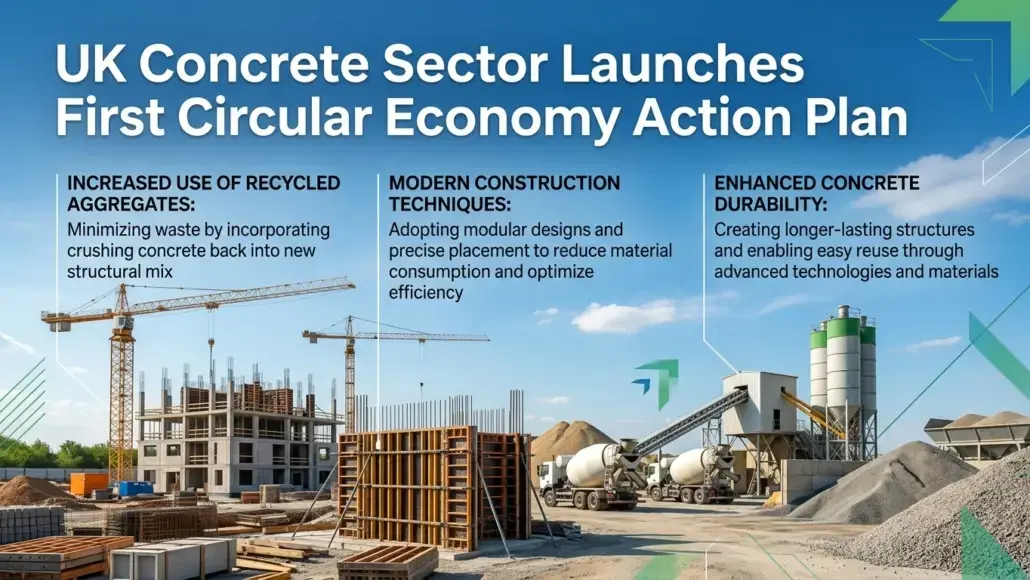


The trade body MPA UK Concrete has officially launched its Circular Economy Action Plan (CEAP), marking the introduction of the first comprehensive circular economy framework for a major structural construction material. This evidence-driven strategy is designed to maintain the maximum value of concrete across its entire operational lifespan. Building on more than a decade of resource-efficiency advancements, the plan seeks to foster a more circular system through deep collaboration with the broader built environment. The initiative specifically calls for a unified effort among developers, architects, contractors, and regulators to eliminate recovery obstacles and ensure the long-term optimal use of concrete.
Building on the foundation of the Resource Efficiency Action Plans initiated in 2014, the sector has already achieved significant milestones. Manufacturing waste sent to landfills was reduced to 0.3 kilograms per tonne of output in 2023, and the industry is now aggressively pursuing a target of zero landfill waste by 2030. The CEAP also highlights the existing circular contributions of UK cement production, noting that 54.1% of the sector’s fuel in 2023 originated from waste materials. This include refuse-derived fuels sourced from non-recyclable household and commercial waste that would otherwise require disposal in landfills.
The new action plan is organized around the critical phases of concrete’s lifecycle, including production, transportation, design, construction, and demolition. For the first time, the sector has introduced specific indicators to track the share of recyclable packaging materials and the reach of takeback programs. Furthermore, the plan emphasizes the availability of producer assistance to help construction clients minimize the volume of leftover concrete on job sites. Andrea Charlson, head of sustainability for UK Concrete, noted that while the material is inherently durable and recyclable, the industry must now transition these advantages into a more defined framework. Charlson emphasized that achieving true circularity for this structural construction material requires designers, contractors, and policymakers to collaborate to keep concrete in use at its highest value for the longest period possible.