
























The global construction industry stands at a pivotal crossroads where the demand for infrastructure must be balanced against the urgent need to mitigate climate change. Central to this challenge is the environmental impact of cement production, which currently accounts for approximately eight percent of global carbon dioxide emissions. The emergence of low-carbon cement and concrete technologies represents a fundamental shift in how we approach the built environment. By reimagining the chemical composition of binders and integrating carbon capture mechanisms directly into the production process, the industry is paving the way for a more sustainable and resilient future. This transition is not merely an incremental improvement but a radical overhaul of the supply chain, from the quarry to the final pour.
The Chemistry of Change: Geopolymers and Alternative Binders
Traditional Portland cement production is inherently carbon-intensive due to the calcination process, where limestone is heated to extreme temperatures, releasing vast amounts of CO2 as a byproduct. To address this, researchers and manufacturers are increasingly turning to low-carbon cement and concrete technologies that utilize alternative binders. Geopolymer cement, for example, relies on a chemical reaction between alkali-activated aluminosilicate materials such as fly ash or slag rather than the traditional limestone-based clinker. This substitution can reduce the carbon footprint of the binder by up to eighty percent while providing superior resistance to chemical attack and high temperatures. These binders are not only environmentally superior but also offer structural benefits that traditional materials struggle to match in specific high-stress environments.
Supplementary Cementitious Materials (SCMs) and Industrial Synergy
The use of Supplementary Cementitious Materials (SCMs) is another cornerstone of modern low-carbon cement and concrete technologies. By replacing a portion of the Portland clinker with industrial byproducts like ground granulated blast-furnace slag (GGBS) or silica fume, producers can significantly lower the embodied energy of the final product. This approach fosters a circular economy where the waste of one industry becomes a vital resource for another. Beyond waste reduction, these materials often enhance the long-term durability of the concrete, reducing the need for frequent repairs and further extending the lifecycle of the infrastructure. The integration of LC3 (Limestone Calcined Clay Cement) is also gaining traction, offering a way to utilize abundant clay resources to further reduce clinker reliance.
Carbon Mineralization and the Concrete-as-a-Carbon-Sink Concept
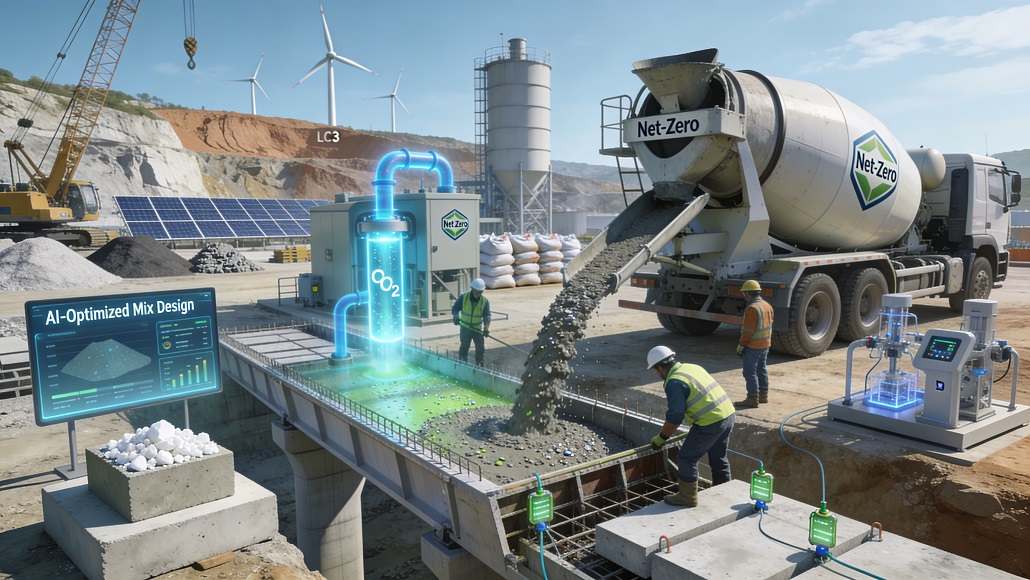
One of the most exciting frontiers in the sector is the development of carbon capture and mineralization. Unlike traditional methods that simply aim to reduce emissions, these low-carbon cement and concrete technologies actually turn concrete into a carbon sink. By injecting captured CO2 into the concrete mix during the batching process, the carbon reacts with calcium ions to form solid calcium carbonate minerals. This mineralization not only permanently sequesters the carbon but also increases the compressive strength of the concrete, allowing for a reduction in the total amount of cement required for a given structural application. This creates a rare win-win scenario where environmental goals and engineering requirements align perfectly to produce a superior building block.
Optimizing Mix Designs Through Algorithmic Precision
The transition to greener building materials is being accelerated by the integration of data science and artificial intelligence. By utilizing advanced algorithms to optimize mix designs, engineers can precisely calibrate the ratio of binders, aggregates, and admixtures to achieve the desired performance with the lowest possible environmental impact. These low-carbon cement and concrete technologies allow for site-specific customization, ensuring that the concrete is perfectly suited to its environmental conditions while minimizing wasteful over-engineering. This level of precision is essential for scaling sustainable practices across diverse global markets where material availability varies significantly. Furthermore, real-time monitoring of the curing process through digital sensors ensures that the structural integrity of these new mixes meets the most stringent safety standards.
Regulatory Drivers and the Shift in Green Procurement
The adoption of low-carbon cement and concrete technologies is no longer driven solely by corporate social responsibility but by a rapidly evolving regulatory landscape. Governments worldwide are implementing stricter carbon taxes and building codes that mandate the disclosure of embodied carbon through Environmental Product Declarations (EPDs). Furthermore, public procurement policies are increasingly favoring contractors who utilize sustainable materials, creating a powerful financial incentive for innovation. This shift ensures that low-carbon solutions move from niche “demonstration” projects into the mainstream of the multi-trillion dollar construction market. The financial sector is also playing a role, with green bonds and ESG-linked loans providing more favorable terms for projects that demonstrably reduce their carbon intensity.
Overcoming the “Prescriptive” Barrier in Engineering Standards
Despite the clear benefits, the widespread adoption of low-carbon cement and concrete technologies faces challenges rooted in traditional engineering standards. Many building codes are “prescriptive,” meaning they mandate specific ingredients and ratios based on decades-old data rather than “performance-based” results. To fully unlock the potential of green cement, the industry must transition toward standards that focus on the final strength, durability, and safety of the structure. This change requires a collaborative effort between material scientists, structural engineers, and insurance providers to build confidence in the long-term performance of these innovative materials. Education of the broader engineering community is vital to ensure that the fear of the unknown does not hinder the progress of necessary environmental solutions.
The Economic Reality of Sustainable Scale
While the initial cost of some low-carbon cement and concrete technologies may be higher than traditional alternatives, the total cost of ownership tells a different story. Reduced maintenance requirements, longer asset lifespans, and the ability to avoid carbon penalties make green concrete a financially sound choice for long-term investors. As production scales and supply chains mature, the price gap is narrowing, making sustainable construction accessible to a wider range of projects. The goal is to reach a tipping point where low-carbon concrete is not the “premium” option but the default standard for all infrastructure. This requires a shift in how we value assets, moving from lowest-initial-cost models to a total-lifecycle-value perspective.
Global Supply Chain Challenges and Material Availability
For low-carbon cement and concrete technologies to be effective on a global scale, the industry must address the geographical variance in material availability. For instance, fly ash is becoming less available as coal-fired power plants are decommissioned, while GGBS is tied to the output of steel mills. This creates a need for local innovation to find alternative SCMs, such as volcanic ash, rice husk ash, or recycled glass. By developing local supply chains, construction projects can further reduce transportation emissions and support regional economies. The logistics of moving these materials also requires specialized handling to ensure that the quality of the green binders is preserved throughout the transit process, emphasizing the need for a smarter, more integrated supply chain.
Future Horizons: Bio-Cement and Nano-Technologies
As we look further into the future, the next generation of low-carbon cement and concrete technologies is already in the laboratory. Bio-cement, which uses bacteria to grow minerals that bind aggregates together, offers a path to truly “zero-carbon” materials that can be produced at ambient temperatures. Similarly, the integration of nano-materials like graphene can dramatically increase the strength of concrete at the molecular level, allowing for ultra-thin structural members that use a fraction of the material required today. These innovations represent the ultimate goal of the industry: a built environment that exists in harmony with the natural carbon cycle. The potential for “self-healing” concrete also promises to drastically reduce the need for cement-intensive repairs in the future, further lowering the cumulative carbon footprint of our cities.
Strategic Integration with Modern Construction Methods
The use of low-carbon cement and concrete technologies is increasingly being paired with Modern Methods of Construction (MMC), such as pre-casting and 3D concrete printing. Pre-casting in a controlled factory environment allows for much higher precision in mix ratios and less waste compared to on-site pouring. Meanwhile, 3D printing enables the creation of complex, topologically optimized shapes that use material only where it is structuraly required, further reducing the total volume of cement used. This convergence of material science and advanced manufacturing is creating a new era of structural efficiency that was previously impossible. It also allows for the integration of sensors and smart systems directly into the concrete members, turning the structural skeleton of the building into a data-generating asset.
Conclusion: Building the Foundation of a Net-Zero World
The transformation of the cement and concrete industry is perhaps the most critical component of the global net-zero strategy. By embracing low-carbon cement and concrete technologies, the construction sector is moving from being a primary contributor to the climate crisis to becoming a key part of the solution. This journey requires a combination of chemical innovation, digital precision, and regulatory courage. As these technologies continue to mature and integrate into the global supply chain, the buildings we create today will stand as a testament to our ability to innovate for the survival of the planet. The legacy of this generation of builders will be defined by their willingness to challenge the status quo and build with a conscience that extends far beyond the immediate horizon of the project.