
















Close
WORLD OF CONCRETE
Saturday, December 20, 2025
JEC WORLD 2026

Fund That Will Help Build World-Class Venues In Saudi Arabia

Note* - All images used are for editorial and illustrative purposes only and may not originate from the original news provider or associated company.

Subscribe

- Never miss a story with notifications

- Gain full access to our premium content

- Browse free from any location or device.

Media Packs

Expand Your Reach With Our Customized Solutions Empowering Your Campaigns To Maximize Your Reach & Drive Real Results!

– Access the Media Pack Now

– Book a Conference Call

Leave Message for Us to Get Back

Related stories

How To Choose Trailer GPS Units That Actually Work for UK Fleets

You know the drill. A trailer van goes missing...

Lifecycle Focused Construction Practices for Sustainable Infrastructure

Sustainable infrastructure development requires extending construction thinking beyond initial project completion to encompass the entire building lifecycle spanning decades of operation, maintenance, and eventual decommissioning. By integrating lifecycle cost analysis, selecting durable materials, designing for operational efficiency, planning for maintenance accessibility, and anticipating end-of-life material recovery, construction professionals create assets that deliver long-term value while minimizing environmental impact. This holistic approach transforms infrastructure from cost centers requiring perpetual maintenance into resilient assets that serve communities sustainably across generations.

Improving Construction Efficiency Without Compromising Quality

Achieving construction efficiency requires process-focused improvements that enhance productivity while maintaining or improving quality standards. Through workflow optimization, enhanced coordination mechanisms, quality management practices, and strategic technology integration, construction organizations deliver projects faster and more cost-effectively without sacrificing structural integrity or compliance. Balancing speed with excellence transforms construction management from a trade-off exercise into a synergistic approach where efficiency and quality reinforce one another.
- Advertisement -
Achema Middleeast

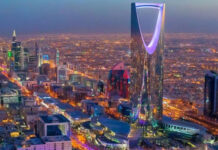
World Construction Today – Saudi Arabia has launched the The Events Investment Fund (EIF) as it aims to develop a sustainable infra for tourism, culture, entertainment as well as sports across the country. EIF will be funded with US $3.7bn to make sure that it develops world-class venues that are expected to be more than 35 in number by the end of the decade. It also seeks to create a strategic collaboration that will help boost the local industry, give a surge in foreign investments and also contribute towards the national vision of 2030 of being a vibrant society.

This funding was declared by His Royal Highness Prince Mohammed bin Salman bin Abdulaziz Al-Saud, the Crown Prince, who happens to be the Prime Minister and also the Chairman of the EIF. As per the statement, the funding is going to focus on the elevation of direct foreign investment for a GDP impact of somewhere around $7.5bn by 2045. It will also raise capital by giving out profitable high returns to the financial institutions as well as the private sector.

A section of the remittance from the EIF will be for nurturing collaboration between private and public verticals and also availing a secure build-up to nurture strategic partnerships across the events industry and thereby increasing the number of jobs for the citizens.

The main aim of the RIF happens to be to position the kingdom as a global hub across various event sectors, provide top-notch sustainable infrastructure for the execution of an extraordinary national events calendar, and at the same time give out sustainable financial returns that support the economic diversification efforts. The assets of the EIF shall include art galleries, indoor arenas, horse racing tracks as well as auto racing tracks, conference centers, and many other event facilities spread across the country, with an objective to deliver the first asset by this year. The fund is also inclined to uphold the highest social, environmental, and governance standards that align with Saudi Arabia’s sustainability agenda. The EIF strategy is based on pivotal pillars such as invigorating societies, maintaining robust governance, as well as elevating the environment.

The statement also said that EIF, with respect to diversifying the economy, will contribute towards Vision 2030 by supporting the contribution of the tourism industry to the GDP from the current 3% to more than 10% by 2030.

Besides this, the EIF is also going to help in transforming the kingdom into a worldwide tourist location, which is expected to attract more than 100 million tourists by the end of the decade and make it one of the world’s most visited nations. This initiative will be aligned with the quality-of-life programme of the country, which looks to enhance the quality of life across individuals as well as families by developing requisite venues that are sustainable. Apart from this, the EIF’s vision is also in sync with the strategy of the National Development Fund, which aims to make the funding an important enabler in meeting the economic and social objectives by 2030 by overcoming the existing issues, practising worldwide best practices, and giving thrust to a threefold increase in the impact of the private sector on the country’s economy by 2030.

Achema Middleeast

Latest stories

Related stories

How To Choose Trailer GPS Units That Actually Work for UK Fleets

You know the drill. A trailer van goes missing...

Lifecycle Focused Construction Practices for Sustainable Infrastructure

Sustainable infrastructure development requires extending construction thinking beyond initial project completion to encompass the entire building lifecycle spanning decades of operation, maintenance, and eventual decommissioning. By integrating lifecycle cost analysis, selecting durable materials, designing for operational efficiency, planning for maintenance accessibility, and anticipating end-of-life material recovery, construction professionals create assets that deliver long-term value while minimizing environmental impact. This holistic approach transforms infrastructure from cost centers requiring perpetual maintenance into resilient assets that serve communities sustainably across generations.

Improving Construction Efficiency Without Compromising Quality

Achieving construction efficiency requires process-focused improvements that enhance productivity while maintaining or improving quality standards. Through workflow optimization, enhanced coordination mechanisms, quality management practices, and strategic technology integration, construction organizations deliver projects faster and more cost-effectively without sacrificing structural integrity or compliance. Balancing speed with excellence transforms construction management from a trade-off exercise into a synergistic approach where efficiency and quality reinforce one another.

Training Strategies for Operating Advanced Construction Equipment

Modern construction equipment demands operator skills that extend far beyond basic machinery operation. Comprehensive training programs combining classroom instruction, simulator practice, and hands-on field experience prepare operators to safely and efficiently manage increasingly sophisticated equipment. Through structured certification approaches, ongoing skill development, and commitment to continuous learning, construction organizations develop operator competency that enhances project safety, productivity, and equipment longevity.

Subscribe

- Never miss a story with notifications

- Gain full access to our premium content

- Browse free from any location or device.

Media Packs

Expand Your Reach With Our Customized Solutions Empowering Your Campaigns To Maximize Your Reach & Drive Real Results!

– Access the Media Pack Now

– Book a Conference Call

Leave Message for Us to Get Back

Translate »