























Key Takeaways:
- The globalization of construction demands a shift toward climate adapted construction materials global markets provide, ensuring that buildings are specifically engineered to withstand regional stressors such as extreme heat, high humidity, and severe wind loads.
- Innovative materials like phase-change materials, engineered bamboo, and hempcrete offer superior environmental performance and energy efficiency, helping projects meet increasingly stringent sustainability and carbon-neutrality targets.
- Adopting climate-adapted materials is not only an environmental necessity but a strategic financial decision that reduces long-term operational costs, improves occupant health, and enhances the overall resilience of the global built environment.
Climate Adapted Construction Materials for Global Markets
In an era of increasing climatic volatility, the construction industry is no longer able to rely on a “one-size-fits-all” approach to material selection. A building designed for the dry, arid heat of the Middle East must function fundamentally differently than one situated in the humid, monsoon-prone regions of Southeast Asia or the sub-zero environments of the Arctic Circle. The rise of climate adapted construction materials global markets now demand is a direct response to this necessity. By tailoring material properties to the specific environmental stressors of a region, architects and engineers can create structures that are not only more durable but also significantly more energy-efficient and comfortable for their inhabitants.
The Drivers of Regional Material Adaptation
The push for climate adapted construction materials global markets is being driven by three primary factors: resource scarcity, rising energy costs, and the increasing frequency of extreme weather events. Traditional materials like standard concrete and steel are energy-intensive to produce and often perform poorly in extreme temperatures without significant mechanical cooling or heating. Consequently, there is a growing movement toward “climate-responsive” materials that work with the environment rather than against it. This involves a deep dive into local geography, traditional building wisdom, and cutting-edge material science to find the optimal balance for each project.
Thermal Mass and Insulation in Extreme Heat
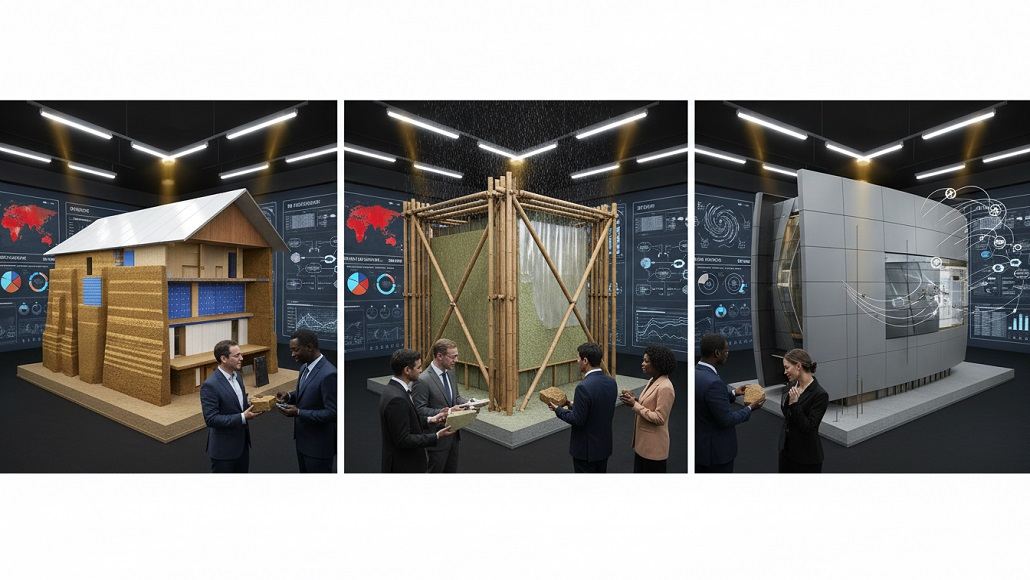
In hot, arid climates, the primary challenge is managing solar gain and maintaining a cool interior without bankrupting the building owner through electricity bills. Climate adapted construction materials global markets for these regions often focus on high-thermal-mass materials like rammed earth, stone, or specialized phase-change materials (PCMs). These materials absorb heat during the day and release it slowly at night, effectively “smoothing out” the temperature peaks. Additionally, the use of “cool roofs” materials with high solar reflectance can reduce a building’s surface temperature by dozens of degrees, significantly lowering the cooling load.
The Integration of Phase-Change Materials
Phase-change materials are particularly fascinating as they represent the high-tech end of climate adaptation. These materials can be integrated into drywall or insulation; they melt and solidify at specific temperatures, absorbing and releasing heat in the process. This passive temperature regulation is a perfect example of the innovative climate adapted construction materials global markets are beginning to embrace to achieve net-zero energy goals. By reducing the reliance on air conditioning, these materials also help mitigate the “urban heat island” effect, where cities become significantly warmer than their surrounding rural areas.
Addressing Humidity and Moisture in Tropical Regions
In tropical climates, the enemy is not just heat, but the combination of heat and extreme humidity. This creates a breeding ground for mold and can lead to the rapid degradation of organic building materials. Climate adapted construction materials global markets for these zones prioritize moisture-resistant and breathable systems. For instance, the use of engineered bamboo a material that is naturally resilient and fast-growing is gaining traction. When treated correctly, bamboo offers the strength of steel with a much lower carbon footprint and excellent performance in humid conditions.
Breathable Facades and Vapor Management
Traditional building envelopes in the West often rely on airtight seals, but in the tropics, this can trap moisture inside the walls. Modern climate adapted construction materials global markets are seeing a resurgence in breathable “rain-screen” facades. these systems allow for air circulation behind the outer cladding, which helps dry out any moisture that penetrates the surface. Combined with advanced vapor-permeable membranes, these materials ensure that the building’s “skin” can breathe, preventing structural rot and improving the health of the indoor environment.
Resilience in the Face of Wind and Storms
As climate change increases the intensity of hurricanes and cyclones, the demand for wind-resilient building materials has skyrocketed. In these global markets, the focus shifts toward impact resistance and structural ductility. Fiber-reinforced concrete and ultra-high-performance concrete (UHPC) are being used to create thin yet incredibly strong panels that can withstand the impact of wind-borne debris. Furthermore, the development of flexible glazing systems that can “give” slightly under extreme wind pressure without shattering is a key advancement in climate adapted construction materials global markets.
The Role of Aerodynamics and Structural Form
While the material itself is important, how it is shaped also plays a role in its climate adaptation. We are seeing more buildings with curved profiles and porous facades that allow wind to pass through or around the structure, reducing the overall wind load. This synergy between architectural form and material properties is essential for the next generation of resilient infrastructure. The climate adapted construction materials global markets provide the palette, but it is the ingenious application of these materials that creates a truly storm-resistant building.
Environmental Performance and the Circular Econom
A critical aspect of being “climate adapted” is the environmental performance of the material itself throughout its lifecycle. A material that performs well in situ but has a massive carbon footprint during manufacturing is no longer considered a viable solution. Therefore, climate adapted construction materials global markets are increasingly looking toward “low-carbon” alternatives. This includes the use of recycled aggregates in concrete, carbon-negative bricks made from captured CO2, and bio-based materials like hempcrete.
Hempcrete and Bio-Based Insulation
Hempcrete, a mixture of hemp shiv and lime, is an excellent example of a multi-functional climate-adapted material. It is carbon-sequestering, provides great thermal insulation, and is naturally fire-resistant and mold-resistant. While it doesn’t have the load-bearing capacity of concrete, its use as an infill material is growing in climate adapted construction materials global markets as developers seek ways to lower the embodied carbon of their projects while improving thermal performance.
Navigating Global Standards and Supply Chains
For these materials to be successful on a global scale, they must be supported by international standards and reliable supply chains. Organizations like the World Green Building Council are working to harmonize the “green” certifications across different countries, making it easier for developers to source and specify climate adapted construction materials global markets offer. However, the challenge remains in the logistics moving bulky, low-carbon materials long distances can sometimes negate their environmental benefits. This is why there is a strong emphasis on developing local production facilities for these specialized materials.
The Economic Case for Climate Adaptation
While the upfront cost of some climate-adapted materials can be higher than traditional options, the long-term economic case is undeniable. Reduced energy bills, lower maintenance costs, and increased building longevity mean that the total cost of ownership is often much lower. Furthermore, as governments introduce carbon taxes and stricter building regulations, the “risk” of not using these materials is becoming a financial liability. Investors are now looking at climate adaptation as a key metric for ESG (Environmental, Social, and Governance) reporting, further fueling the growth of climate adapted construction materials global markets.
The Crux of Resilient Global Construction
In conclusion, the shift toward climate adapted construction materials global markets is not just a trend; it is a fundamental transformation of how we interact with the built environment. By respecting the unique demands of each geographic location and leveraging the best of both traditional wisdom and modern science, we can build a world that is more resilient to the challenges of tomorrow. The core of this movement the climate adapted construction materials global markets is the bridge between our current carbon-intensive practices and a more sustainable, resilient future.
