






























Urbanization and rising real estate costs have triggered a significant shift in contemporary residential design. As living spaces in major cities become smaller, the challenge of creating comfortable, functional, and organized homes has become more acute. Standard, off-the-shelf furniture is often inadequate for these compact footprints, frequently leaving valuable space underutilized while contributing to visual clutter. To address these spatial constraints, modern interior designers and architects are turning to highly customized, integrated storage systems. Utilizing smart storage solutions optimizing interior functionality is now recognized as a key strategy for transforming compact spaces into elegant, high-performing homes. By integrating clever spatial engineering, custom millwork, and advanced hardware, these solutions maximize efficiency without sacrificing aesthetic appeal.
The Urbanization Challenge and the Evolution of Modern Interiors
The trend toward smaller residential footprints is driven by demographic shifts, economic realities, and a growing preference for urban living. Modern apartments and condominiums often feature open-floor layouts that combine the kitchen, dining, and living areas. While these open layouts make spaces feel larger, they also eliminate traditional walls and closets, reducing available storage.
Without adequate, structured storage, open-plan spaces can quickly become cluttered, disrupting the visual harmony of the home and causing stress for the occupants. This has led to a reimagining of residential interiors, where storage is no longer viewed as an afterthought but as an integral element of the architectural design. Designers must approach storage with a high degree of precision, ensuring that every square inch of space is optimized to support the daily lives of the residents.
The Engineering of Space Optimization and Efficiency
Effective space optimization is a precise design discipline that requires a deep understanding of geometry, human behavior, and construction techniques. Designers must identify and utilize overlooked areas within a home, such as vertical wall surfaces, under-stair cavities, high ceilings, and deep corners.
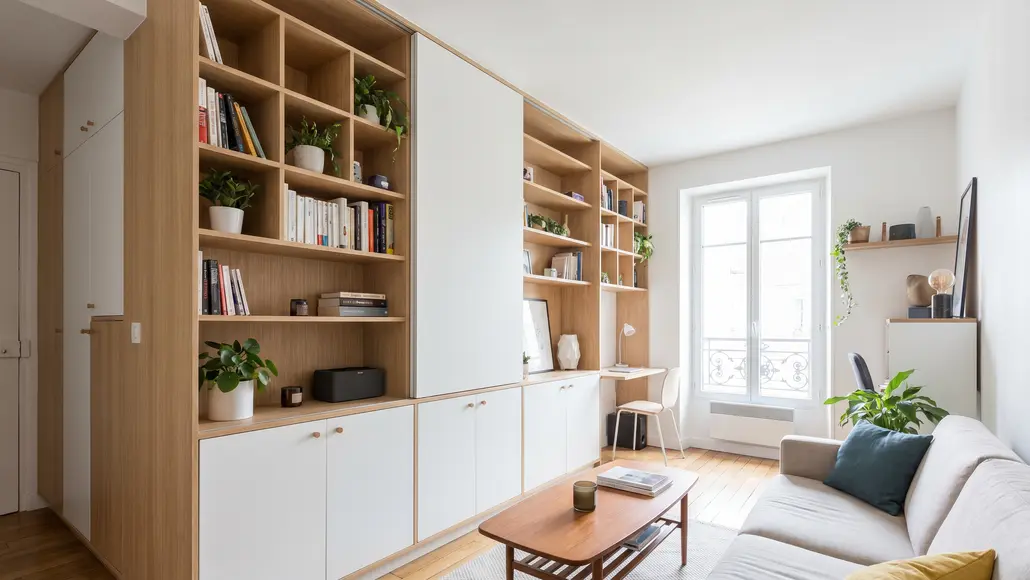
Vertical space represents one of the most underutilized assets in residential interiors. By taking cabinetry all the way to the ceiling, designers can significantly increase storage capacity without reducing floor space. High-level storage can be reserved for seasonal items, while lower, more accessible zones are configured for everyday use. Additionally, recessed storage niches built into wall cavities can provide valuable display and storage space in tight corridors or small bathrooms, maintaining smooth traffic flows and preventing visual obstructions.
Custom Cabinetry as the Foundation of Functional Design
When it comes to maximizing spatial efficiency, custom cabinetry is unmatched. Unlike mass-produced furniture, custom millwork is designed and manufactured to fit the exact dimensions of a specific space, eliminating unsightly gaps and maximizing storage capacity.
In the kitchen, custom cabinetry can turn challenging corners and narrow gaps into highly functional storage zones. Modern blind-corner pull-outs, such as LeMans trays or lazy susans, bring items stored deep within corner cabinets within easy reach. Narrow, pull-out spice racks and pantry columns utilize gaps as thin as six inches, providing structured, accessible storage for bottles, jars, and dry goods. In the bedroom, custom wardrobe systems can be tailored with specific hanging rails, accessory drawers, and built-in lighting, matching the exact storage needs of the user.
Optimizing Kitchen Workflows with Specialized Storage
The kitchen is often referred to as the heart of the home, but it is also a highly demanding workspace. Specialized kitchen storage plays a key role in improving daily efficiency and safety. Traditional base cabinets with deep shelves require users to bend down and search in the dark for heavy pots and pans. Modern designs replace these shelves with wide, deep drawers that slide out completely on heavy-duty drawer runners.
By using high-sided drawer systems, heavy items like cookware, plates, and small appliances are stored within easy reach. Adjustable internal drawer division systems allow users to organize cutlery, utensils, and containers neatly, preventing shifting when the drawer is opened or closed. Furthermore, integrated waste management systems hidden within a sink base cabinet allow for easy separation of recyclables, organics, and general waste, keeping bins out of sight and maintaining clean, modern aesthetics in the culinary space.
Wardrobes and Walk-In Closets as Personalized Organizers
In residential master suites, the wardrobe or walk-in closet is a vital storage zone. High-performance closet design goes beyond simple hanging rods and fixed shelves, using modular configurations to customize storage to individual wardrobes.
Advanced wardrobe hardware includes pull-down hanging rails, also known as wardrobe lifts, which allow users to utilize the highest sections of the closet for hanging clothes. With a gentle pull on a central rod, the entire rail lowers to shoulder height, making it easy to access garments. Built-in accessory drawers with glass-fronted panels and velvet-lined compartments are designed to keep watches, jewelry, belts, and ties organized and protected. Integrated shoe racks, with slanted shelves and non-slip surfaces, maximize shoe storage while keeping footwear visible. Internal LED lighting, activated by magnetic door sensors, ensures that every corner of the wardrobe is perfectly illuminated, making getting dressed a smooth and enjoyable routine.
Multi-Functional and Transforming Furniture Integration
In compact homes, single-purpose rooms are a luxury that few can afford. Spaces must be versatile, easily transitioning from a home office by day to a bedroom by night. Multi-functional and transforming furniture is key to achieving this flexibility.
The modern Murphy bed is a classic example of transforming furniture. Today’s systems are highly sophisticated, featuring integrated desks, sofas, or shelving units that remain level when the bed is lowered, eliminating the need to clear surfaces. Storage ottomans, coffee tables with lift-top mechanisms that reveal hidden compartments and rise to dining-table height, and modular sofas with under-seat storage are other excellent options. These dual-purpose solutions ensure that every piece of furniture contributes to the overall storage capacity while enhancing the adaptability of the home.
Ergonomic Storage Workflows and Human-Centric Design
A storage system is only effective if it is easy and comfortable to use. Human-centric design principles dictate that storage should be configured around the physiological capabilities and daily workflows of the occupants, an approach known as ergonomic storage planning.
The “golden zone” of storage is the area between the user’s shoulders and knees, which can be reached easily without bending down or stretching up. Everyday items should be stored within this zone, while rarely used items are placed in higher or lower sections. Drawers and pull-out shelves are far more ergonomic than static, deep shelves, as they bring items directly into view and within easy reach, preventing the need to rummage through dark cabinets. By aligning storage configurations with the natural movements of the human body, designers create interiors that feel intuitive, comfortable, and effortless to live in.
Aesthetic Minimalism and Seamless Spatial Landscapes
While functionality is paramount, the visual appearance of storage systems has a major impact on the perceived size and feel of a home. Massive, heavy wardrobes can make a room feel cramped and dark. Modern designers favor minimal, seamless storage systems that blend into the surrounding architecture.
Handleless, push-to-open doors finished in colors that match the walls create a flat, continuous surface that looks like part of the wall structure. This architectural integration, sometimes referred to as “hidden storage,” minimizes visual noise and helps the room feel larger and more open. When storage elements are integrated into wall paneling or run seamlessly from the entryway into the living area, they provide abundant storage while maintaining a clean, cohesive, and tranquil aesthetic.
Material Innovations and High-Performance Hardware Solutions
The durability and performance of smart storage systems depend heavily on the quality of the materials and hardware used. Soft-close hinges, heavy-duty drawer slides, and smooth pull-out mechanisms are essential for ensuring that custom cabinetry operates flawlessly over decades of daily use.
Leading hardware manufacturers, such as Blum and Grass, produce specialized fittings that enable incredibly smooth movement and heavy load capacities. Soft-closing technology prevents drawers and doors from slamming, reducing wear on the cabinetry and creating a quiet, peaceful home environment. For materials, high-pressure laminates, medium-density fiberboards with premium veneers, and multi-layered plywood are widely used for their stability, warping resistance, and durability. These engineered wood products can be finished in a wide variety of textures, from ultra-matte anti-fingerprint surfaces to rich, warm timber grains.
The Future of Intelligent Storage and Smart Home Automation
As smart home technology continues to evolve, storage systems are becoming increasingly intelligent. The integration of LED strip lighting with motion sensors is now a standard feature, illuminating cabinet interiors automatically when a door is opened.
Looking ahead, we can expect to see storage systems integrated with RFID technology and inventory management software. Imagine a kitchen pantry that tracks expiration dates and automatically adds items to your shopping list when they run low, or a smart wardrobe that suggests outfits based on the weather forecast and your calendar. Motorized lifting systems that lower high-level storage baskets at the touch of a button or a voice command will make vertical storage accessible to everyone, including elderly or mobility-impaired individuals.
In conclusion, implementing smart storage solutions optimizing interior functionality is a fundamental requirement for modern, high-quality residential design. By blending spatial intelligence, custom millwork, ergonomic planning, and high-performance hardware, these systems transform compact, challenging footprints into highly organized, spacious, and beautiful homes. As urban living continues to evolve, these innovative storage systems will remain essential to creating interior environments that support, inspire, and elevate our daily lives.